




A majority of Germans have said they were in favour of a return to nuclear power, two years after the last of its 17 nuclear power plants was switched off.
Comparison website Verivox revealed the numbers on April 4 after what it said was a representative survey conducted by pollster Innofact in March 2025.
According to the survey, 55 per cent of Germans wanted the country to start producing nuclear power again while 36 per cent rejected the proposition. Nine per cent of the 1,007 respondents were undecided.
Of the supporters of nuclear power, 40 per cent would simply like to see the retired nuclear power plants back online while 60 per cent were in favour of building additional power stations.
Support for nuclear power was stronger among men (62 per cent) than women (47 per cent). Regionally, a pro-nuclear mindset was more prevalent in eastern and southern Germany (around 60 per cent in favour) than in western and northern Germany (about 50 per cent).
The survey results underscored that most Germans appeared ready for a return to nuclear power.
Recently, there have also been tentative signs that a growing movement within the Conservative Christian Democratic Union (CDU) party, set to lead the incoming government, was in favour of turning some nuclear power stations back on – as evidenced by a recent internal CDU working paper.
The CDU under leader Friedrich Merz has not taken a clear position in favour of nuclear yet – and the Social Democratic Party (SDP) as potential governing coalition partners has voiced its clear opposition.
In the ongoing negotiations, the two parties could not agree on evaluating whether a return to nuclear was technically and economically feasible.
Companies from the nuclear energy sector have recently stated that six nuclear power plants could be turned back on by 2030 – provided there was political will to do so.
The first decision to abandon nuclear power was taken in 2000 under a coalition government of the SPD and the Greens, under then-chancellor Gerhard Schröder (SPD).
The first two power plants were switched off in 2003 and 2005 , respectively, with the rest set to be decommissioned by 2020.
In 2010, under then-chancellor Angela Merkel (CDU), the timeframe for the exit from nuclear power was greatly extended up to 2034.
After a huge tsunami hit the Japanese nuclear power station at Fukushima in 2011, Merkel completely turned around her nuclear policy and instated a nuclear safety commission and an ethics commission to determine the future of the country’s power supply.
While the safety commission found no faults in keeping the nuclear plants running, the ethics commission recommended to shut down all plants by the end of the decade.
That commission comprised 17 people and included politicians, union leaders, church representatives, sociologists and a philosopher – but not a single energy expert.
Merkel followed the advice of the ethics commission. In June 2011, the German Bundestag, or parliament, voted with an overwhelming 85 per cent majority to shut down all nuclear power plants by 2022.
After the Russian invasion of Ukraine in February 2022 drove up energy prices in Europe, Germany decided to extend the runtime for some power plants by up to year.
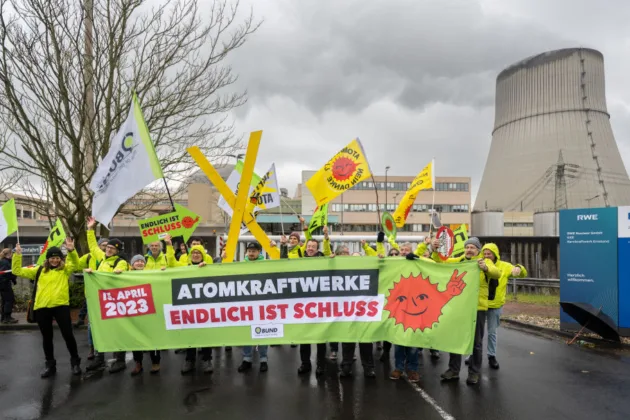
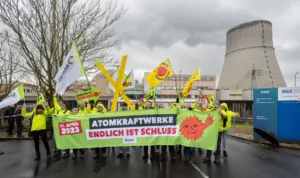
Despite protests from energy experts, the last three German nuclear reactors were switched off on April 15, 2023.
As a consequence of abandoning reliable nuclear power in favour of renewable energy production, Germans now pay the highest prices for electricity in Europe.