



The German Nuclear Energy Association (KernD) has urged likely chancellor-to-be and leader of the Christian Democratic Union (CDU) Friedrich Merz to get to work quickly on reactivating some of the country’s nuclear power plants.
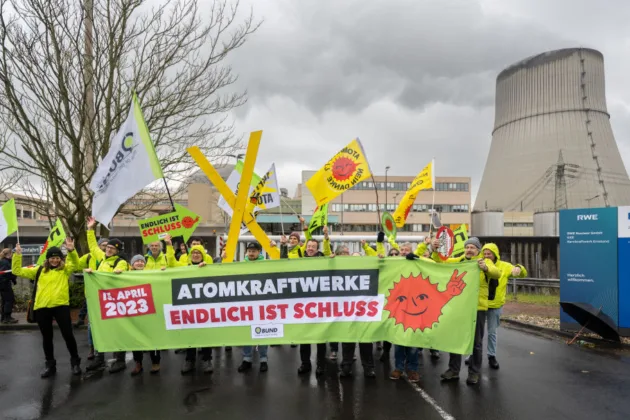
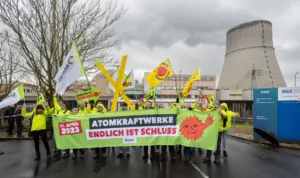
According to KernD, up to six of them could be brought back online by 2030. The last of Germany’s once 37-strong nuclear reactors had been taken out of service in 2023 under the outgoing government.
The nuclear association said the restart costs would amount to €1 billion to €3 billion per reactor, depending on how much the power stations have been rundown since their retirement.
At the behest of the Greens party, many nuclear stations were not just shut down but wilfully destroyed to prevent their later reactivation.
For example, at those in Grohnde (Lower Saxony) and Brokdorf (Schlwesig-Holstein), the primary water circuits were flushed with acid, rendering them permanently unusable.
While the total cost of up to €18 billion for six power stations may seem high, KernD pointed out that nuclear power stations delivered reliable, cheap and emission-free electricity.
Therefore that helped to prevent crippling electricity price spikes that Germany and its neighbouring countries suffered several time this winter. Furthermore, German subsidies for renewable energy generation amounted to more than € 18 billion in 2024 alone, KernD said.
The energy association comprises manufacturers of nuclear power technology, suppliers of fuel rods and related companies. The former operators of the nuclear plants such as E.On, RWE and EnBW had left the association previously in a move to distance themselves from nuclear power which was deemed politically unfavourable at the time.
German utilities companies have shown reluctance to undertake a reactivation of their former nuclear power plants, owing to the high political and financial risks.
KernD proposed using a State-owned enterprise for the reactivation instead. “In many European countries, nuclear power plants are traditionally operated by state companies, such as EdF in France and Vattenfall in Sweden,” it said.
It also pointed to Belgium, where the state has taken a share in a power operator in charge of extending its nuclear power plants’ running times.
So far, Merz has not given a clear indication as to whether he intended to restart the country’s fleet of nuclear plants.
After winning the February 23 elections, he demanded a “dismantling moratorium”, meaning a stop to further destruction of retired nuclear plants.
Recently, Markus Söder, leader of the Conservative Christian Social Union – the Bavarian sister party of Merz’s CDU – has demanded a reactivation of the nuclear power station Isar 2 near Munich, one of the three last reactors to go out of service in 2023.