




Germany’s Conservative Christian Democratic Union (CDU) party is considering restarting six of the country’s recently deactivated nuclear power plants.
According to newspaper Handelsblatt on April 1, a new working paper of the CDU’s parliamentary group demanded an investigation on whether a reactivation of the power stations was technically possible and economically feasible.
If the current owners of the plants in question – energy companies E.On, RWE and EnBW – were not willing to restart the reactors themselves, a State-owned enterprise reportedly could take over ownership of the infrastructure.
The working paper did not reflect an official position of the party but had been noted by party leadership, according to Handelsblatt.
Christian Social Union in Bavaria (CSU) MP Andreas Lenz said: “The nuclear phase-out was a mistake. The longer we wait with reactivation, the more expensive and difficult it becomes.”
He added that Germany’s nuclear phase-out was unique among industrialised nations and had greatly impaired its competitiveness.
A decision to return to nuclear power, though, might prove a stumbling block in the ongoing coalition negotiations between the CDU and the Social Democratic Party (SPD).
So far, the parties’ “climate and energy” working group has not managed to agree on a compromise regarding the future of the nuclear plants. Notably, the CDU’s chief negotiator in the working group, Andreas Jung, has come out as explicitly anti-nuclear in the past.
From a technical perspective, restarting operations of the plants should be feasible, according to Martin Pache, head of German operations for US nuclear company Westinghouse.
“The German installations have been running for 35 years in average. I do not see a reason which would preclude an extension by 20 years,” he said.
Some German-designed reactors in the Netherlands, Switzerland or Spain had been running for 50 years already, Pache continued.
“In the US already permits are extended to 80 years,” he added.
In March 2025, the German Nuclear Energy Association also urged CDU leader Friedrich Merz to restart the six plants referenced in the new working paper.
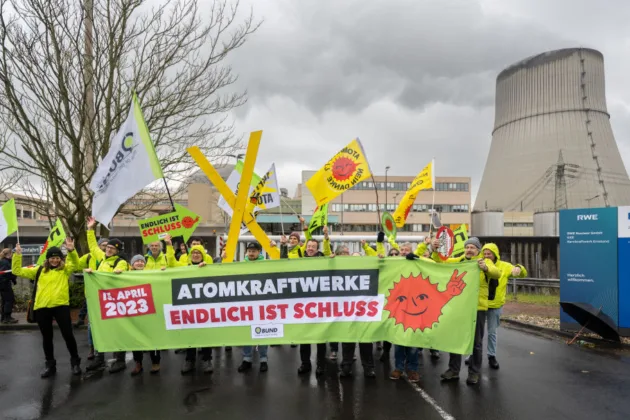
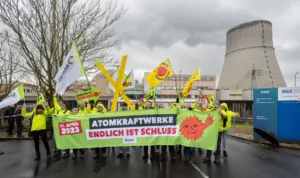
The plants in question were the last such facilities to be deactivated under Germany’s long-standing policy of nuclear phase-out.
The reactors at Emsland (Lower Saxony), Isar 2 (Bavaria), and Neckarwestheim 2 (Baden-Wurttemberg) were switched off in April 2023, around the same time as the plants at Grohnde (Lower Saxony), Gundremmingen (Bavaria), and Brokdorf (Schleswig-Holstein).
Consequently, they are still in comparably good shape while many of the 11 reactors deactivated prior to that have been largely destroyed under the outgoing government led by SPD and the Greens.
The first decision to phase out nuclear power in Germany was taken in 2000 when the SPD and the Greens governed together.
Under a CDU-Free Democratic Party (FDP) coalition the decision was revoked in 2010.
In 2011, following a tsunami in Japan that affected the Fukushima nuclear plant, then-chancellor Angela Merkel (CDU) abruptly returned to the nuclear phase-out plans.