




As the United States approaches its 250th birthday on the Fourth of July, European commentary has settled into a familiar register that we all have heard before: Donald Trump is administering the death blow to American democracy, the institutions are crumbling, and China stands ready to inherit the earth, and that the American century is ending.
Maybe. But then again, we have heard this story before, and there is a simple test for this genre: Replace the name Donald Trump with George W. Bush and most of these pieces could still have been published, almost word for word, twenty years ago. Replace China with Japan and they could have run in the late 1970s, when we were told how the “Island of the Rising Sun” will overtake the United States. There was an even more amusing subgenre created by people like Jeremy Rifkin who wrote a 2004 book claiming that “Europe’s vision of the future is quietly eclipsing the American Dream.”
Still, Mr. Rifkin has yet to surpass my all-time favourite, a 2009 piece by “analyst” Parag Khanna, that announced the EU as the world’s first “metrosexual superpower” poised to strut past “bumbling United States on the catwalk of global diplomacy”. I could do this all day, but I will end with John Kampfner’s 2020 book with the hilarious title “Why the Germans Do It Better: Notes from a Grown-Up Country.” Nobody embodies the perpetual teenager (albeit with a few wrinkles, given its demographics) better than Germany: A country that out of sheer spite destroyed its own energy supply and created one of history’s worst migration crisis. Very grown up, indeed, as the British would say.
In other words, the announced end of the American republic is one of the oldest recurring stories in Western journalism. Now, of course that does not mean it can never come true, but it does mean that anyone announcing it should explain why this time is different.
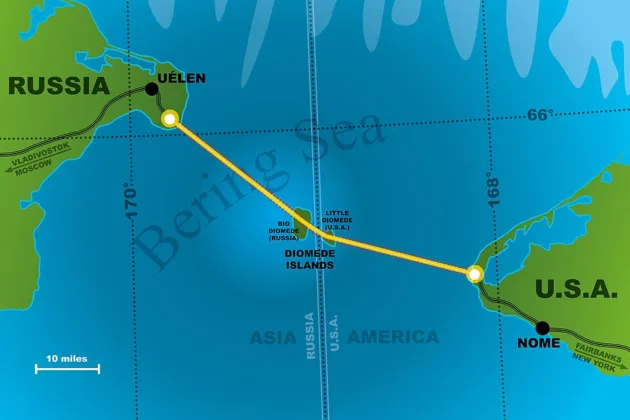
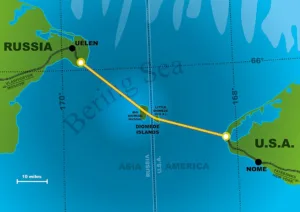
What certainly has ended is the unipolar moment of the 1990s, when Washington expected to have the last word in every corner of the globe. That world will not return, but decline depends entirely on what one chooses to measure. Within its own hemisphere, American influence is far more likely to grow than to shrink in the coming decades, and what is taking shape there looks less like retreat than like consolidation: A fortress not of the United States of America but of the United States of the Americas, reaching from Alaska down to the southern tip of Latin America. The question this raises for Europe, Australia and New Zealand is uncomfortable enough that most prefer not to ask it: Will they be part of this American order, or merely an appendage to it?
Trump’s foreign policy is routinely described as erratic and unpredictable, but the record suggests otherwise, at least to those who listen closely. Just consider the President he has chosen as his historical lodestar: During his inaugural address he announced that he would restore the name of Mount McKinley and praised the 25th president as a man who “made our country very rich through tariffs and through talent”. McKinley, however, was no isolationist. He was the president of the Spanish-American War of 1898, under whom the United States annexed Hawaii and took the Philippines, Puerto Rico and Guam: The man who turned the republic into an overseas empire. A politician who reaches back past a century of his predecessors to McKinley is not dreaming to retreat from the world and became an isolationist.
America First never meant America Alone, and while the Trump administration rejected America’s role as a global development agency financed by US taxpayers, it never embraced a policy of complete disengagement from the world. On Iran, Trump has argued for a harder line for roughly four decades, long before he held any office. And the United States could not withdraw from the world even if it wanted to: It depends on imported rare earths and on semiconductor supply chains it does not fully control. Hence the renewed American interest in the chokepoints of global commerce, the Panama Canal, the Suez Canal, the Strait of Hormuz, whose vulnerability the recent crisis in the Gulf demonstrated daily. That crisis is also a caution against premature verdicts. The campaign against Iran has ended, for now, not in the regime change some in Washington wanted but in a ceasefire and an unresolved nuclear file. To many observers it looks like a defeat, and perhaps it was. Yet a single defeat does not decide the fate of a great power: The United States lost its war in Vietnam in 1975 and won the Cold War sixteen years later. None of this is a Trumpian invention. It is a continuity of American strategy that runs back through 1945 to the first Roosevelt, who happened to be McKinley’s vice president.
Behind this strategy stands a structural advantage that Europeans (and others) continue to underestimate. The analyst Peter Zeihan likes to call the United States an accidental superpower: No country on earth is so favoured by geography. The American Midwest is the largest contiguous stretch of farmland in the world, and the Mississippi and its tributaries form the greatest natural inland waterway on the planet, which is why some 60 per cent of American agricultural produce moves by water, at roughly one fifth the cost of moving it by truck or rail. The United States is the largest producer of both oil and natural gas, and its coasts offer an abundance of natural deep-water harbours. A country so equipped would have to mismanage itself out of greatness, and its institutions were explicitly designed to make that difficult.
A similar pattern holds for the resource that probably matters most in this century, which is the hunt for talent. After Trump’s re-election, a great exodus of scientists and engineers was confidently predicted, above all by Europeans who expected to receive them. It has not materialised. In the 2024/25 academic year American universities enrolled nearly 1.2 million international students, an all-time record. More than half of the country’s billion-dollar start-ups have an immigrant founder, and almost one in four was built by someone who first arrived as an international student. In artificial intelligence, the current frontline of technology, the United States remains the leading destination for the world’s most elite researchers and hosts around 60 per cent of the top AI institutions; American private investment in AI reached roughly $109 billion in 2024 (€95 billion), about twelve times China’s. Beijing, for its part, has begun requiring some of its most important AI specialists to obtain permission before they leave the country. Governments do not place travel restrictions on their own geniuses to keep them from defecting to a power in decline.
Could the boom end badly? Of course. A large part of the recent markget rise rests on a handful of AI-exposed giants: The so-called Magnificent Seven alone produced more than 40 per cent of the S&P 500’s gain in 2025, and Nvidia by itself about a sixth. Nobody can rule out that this is a bubble. But the dotcom crash of 2000 is instructive: The bubble burst, the significance of the internet remained, and while nobody uses Yahoo any more, everybody uses Google. A crash, in the Schumpeterian sense, is a cleansing of the market. The real difference between the two sides of the Atlantic, however, lies elsewhere. In America, a downturn is followed by the expectation of recovery. In Europe, every downturn now feels like one more stage in a permanent descent. More than any single statistic, that gap in expectations measures the divergence between the two continents.
Europe’s preferred response, defining itself in opposition to the United States, is not a strategy. Federal tax receipts in the United States are about 17 per cent of GDP; in the higher-taxed European states the total burden of taxes and social charges runs well beyond 40, with Denmark, France and Austria all above 43 per cent in 2024. As things currently stand there is no serious European competitiveness agenda. Unless Europe begins to deregulate its energy and pretty much every other sector of the economy it will never be a partner to Washington, but at best a vassal. Europe cannot compensate its weakness with moral commentary on American politics, in the hopes that rhetoric wins over reality. It is true that the United States at 250 is not what it was in the 1990s, but does it have to be? It only needs to remain better than the alternatives, and by that standard the final American chapter might not be in the books yet.