


German industry group says country ‘permanently damaged’ as business venue
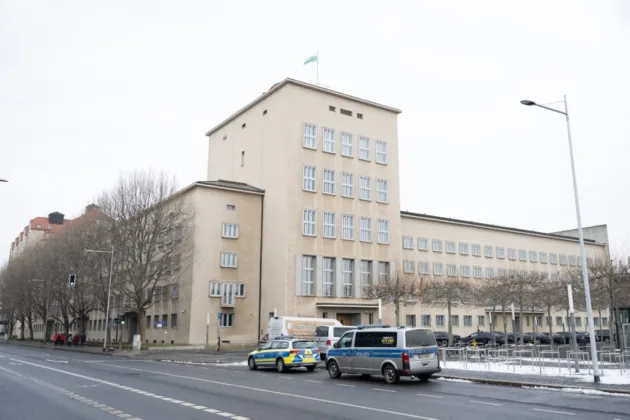
The German industry association for the metals and electronics sector, Gesamtmetall, or the Federation of German Employers' Associations in the Metal and Electrical…
Popular articles tagged "German economy"
The German industry association for the metals and electronics sector, Gesamtmetall, or the Federation of German Employers' Associations in the Metal and Electrical…
Germany’s public sector has incurred a record deficit in 2025, according to numbers published by the country’s Federal Statistical Office.
European Union carbon permit prices have fallen significantly following remarks by German Chancellor Friedrich Merz indicating that he may support an overhaul of…
Politicians in the German town of Great-Gerau near Frankfurt have refused plans by a US company to build one of Europe’s biggest data centres.
A large majority of Germans think their country’s welfare state cannot be upheld financially in its current form.
In an unprecedented scene at Germany's Saxony Landtag, or parliament building, Alternative for Germany (AfD) state parliamentarian Jörg Dornau was detained by police…
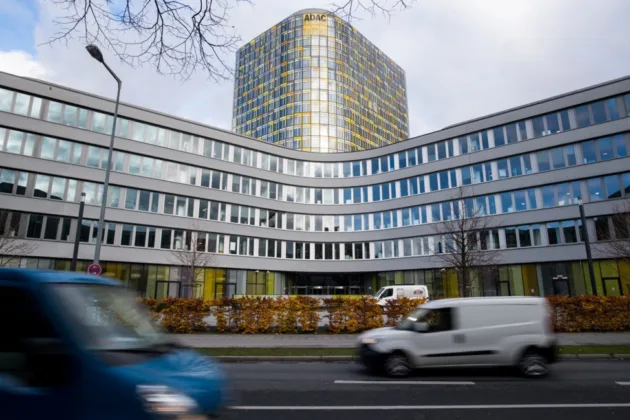
The president of Germany’s largest automobile association ADAC has resigned from his post after he backed raising the price of diesel and petrol.
The German state has paid out a record sum in child benefits to recipients abroad in 2025, latest numbers by the Federal Employment Agency (BfA) show.
An influential pro-business group within Germany’s conservative Christian Democratic Union (CDU) is pushing for an overhaul of the country's climate policy, which…
German companies are paying around €62 billion a year to cover the cost of bureaucracy and administrative demands, both from Berlin and Brussels.
Germany’s steel sector has recorded its bleakest performance in more than 15 years, with crude steel production in 2025 falling to just 34.1 million tonnes.
When Friedrich Merz speaks twice of reconciliation with Russia shortly after a strategically important visit to India, it is not a slip of the tongue. It is a signal.
The German Government is preparing to bring back high subsidies for electrical vehicles (EVs).
The combined tax income of Germany’s federal administration, its states and municipalities surpassed the mark of €1 billion for the first time ever last year,…
The number of bankruptcy cases involving big companies in Germany sharply rose in 2025.
German Chancellor Friedrich Merz issued a stark warning about his country's economy in a New Year's letter to his governing coalition, describing its situation as…
Germany's Economic Affairs Minister Katherina Reiche says her country's next generation will be poorer than the present one unless Germans started to work more hours.
The decision of the State government of Saxony-Anhalt in Germany to proclaim an official Covid-19 emergency to access billions of euros in federal funding has drawn…
The former head of the European Stability Mechanism (ESM) Klaus Regling has warned Germans they will be facing unforeseen losses of wealth and prosperity.
The city of Stuttgart in southwestern Germany might be facing insolvency.
In an interview with Handelsblatt conducted in New York, Palantir Technologies CEO Alex Karp unleashed a blistering assessment of Germany, in particular its flailing…
Germany’s economy is expected to expand only modestly over the next three years, as structural obstacles, global trade pressures, and cautious private investment…
Europe’s push to rearm has run into a series of snags.
Germany’s 630 MPs may once again book business-class tickets at the taxpayer’s expense – if the flight lasts more than two hours.
The Federation of German Industries (BDI), one of Germany’s major business associations, has warned the government of Chancellor Friedrich Merz that the economy…
Several German cities have scaled back or scrapped traditional Christmas illuminations this year, citing soaring costs and strained municipal budgets as the festive…
The cordon sanitaire against the Alternative for Germany party (AfD) looks to be crumbling among German industrialists, with two major associations reviewing their…
German exports to the United States rebounded in September after months of decline following the introduction of US tariffs, helping drive a bigger-than-expected…
Sentiment in Germany’s industrial sector is at rock bottom with more than 40 per cent of companies planning to reduce their workforce in the coming year.
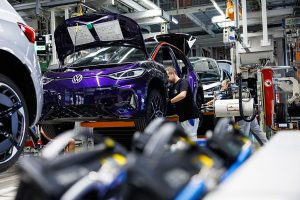
Volkswagen Group, Germany’s biggest vehicle manufacturer, lost €1.07 billion between July and September, according to an earnings release.