








The Federation of German Industries (BDI), one of Germany’s major business associations, has warned the government of Chancellor Friedrich Merz that the economy is facing its worst crisis since the end of the Second World War.
“The business location is in freefall but the federal government is not reacting decisively enough,” BDI president Peter Leibinger said today on the publication of its latest Industry Report.
“German industry is facing a dramatic low point at the end of 2025,” he added.
The BDI expects industrial production to have declined by 2 per cent in 2025 – the fourth annual drop in a row. This is a revision downward from the previous estimate of only minus 0.5 per cent.
“This is not just a temporary economic dip but a structural decline,” Leibinger said.
Germany’s economic malaise is especially striking as the European Union as a whole is leaving industrial recession behind. The BDI expects industrial production to grow by 1 per cent – up from minus 1 per cent – in 2025.
Globally, it is also on the rise and expected to grow by 3 per cent in 2025, according to the BDI report authors.
One main reason cited for Germany’s dire straits are the sky-high energy prices. The cost of electricity shot up in 2022 following Russia’s invasion of Ukraine and has not come down since.
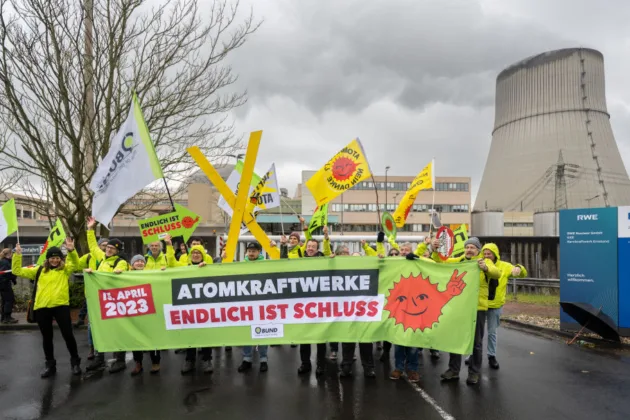
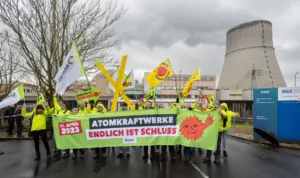
That came as the country switched off its remaining nuclear reactors along with many fossil fuel power plants, opting to rely on uncertain wind and solar power instead.
In 2025, Germany’s electricity prices for businesses were the fifth-highest in the EU and the highest for household consumers, according to Eurostat.
“The sharp rise in energy costs has left a clear mark in Germany’s industry,” the BDI researchers point out.
“While in the EU industrial production was on average 1 per cent higher in Q3 2025 than in 2021, Germany’s industry was producing 5.4 per cent less in the same period.”
Among the sectors hardest hit by de-industrialisation were the foundry, chemicals, textile and metal processing sectors.
Germany’s automotive sector is also suffering as the switch towards electric vehicles mandated by the EU and the government weighs on automotive suppliers.
As of September 2025, employment in the automotive supply sector had fallen by more than 11 per cent within one year to just 235,400 workers.
The BDI researchers conclude: “In the German economy, confidence and optimism are currently nowhere to be found.”