

European Union leaders have paid warm tribute to Keir Starmer after the British Prime Minister announced his resignation, hours before a planned Brexit “reset” summit with Brussels was cast into doubt.
Starmer said on Monday he would stand down as Labour leader, remaining as caretaker prime minister until a successor is chosen. His departure, amid plunging approval ratings, came a day before Britain marked the 10th anniversary of its vote to leave the bloc.
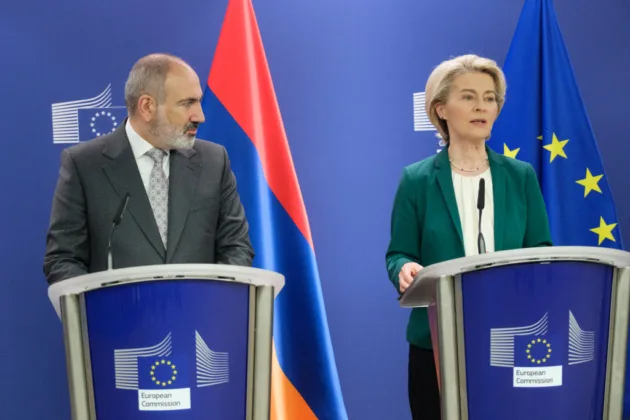
European Commission President Ursula von der Leyen led the praise, writing on X that European and Ukrainian security was “stronger because of you”. Starmer, the first non-Conservative premier since the Brexit referendum, had pushed to improve relations with the EU while ruling out any return to the 27-member bloc.
The second post-Brexit EU-UK summit had been due to take place on July 22, bringing together Starmer, von der Leyen and European Council President António Costa. Following the resignation, the Commission said it was “reassessing” the meeting.
Commission spokesperson Paula Pinho said Brussels and London were examining whether the encounter could still go ahead. One EU diplomat described the postponement as a missed “way point” in efforts to build a more pragmatic relationship with London.
Costa, who represents the EU’s 27 leaders, was similarly effusive. “Under your premiership we turned a new page in EU-UK relations,” he wrote, adding that the bloc remained committed to cooperation.
Attention in Brussels has now turned to Andy Burnham, the former mayor of Greater Manchester, who confirmed he would run to succeed Starmer. Burnham won a parliamentary seat on June 19 and is regarded in EU capitals as something of an unknown quantity.
Wes Streeting, viewed as another contender, said he would back Burnham, making a coronation more likely. One EU diplomat suggested von der Leyen’s tribute carried a message for the incoming leader.
“It’s a signal to Burnham that he can become a statesman if he’s ambitious in his relations with Europe,” the diplomat said.
Reaction elsewhere was cooler. Kremlin spokesman Dmitry Peskov said little would change in Russian-British relations under a new prime minister, claiming Starmer had not distinguished himself on that front.
Starmer won a landslide in the 2024 general election but, like other mainstream European leaders, struggled against voters increasingly drawn to anti-establishment parties.