

European leaders have gathered in the Adriatic port town of Tivat, southwest Montenegro, on June 5, 2026, as the small country has pulled ahead of its Balkan neighbours in the race to join the European Union by 2028.
EU flags and Montenegro’s red-and-gold banner have lined the winding coastal roads of the town, known for its superyachts and limestone mountains, with delegations beginning to arrive on June 4.
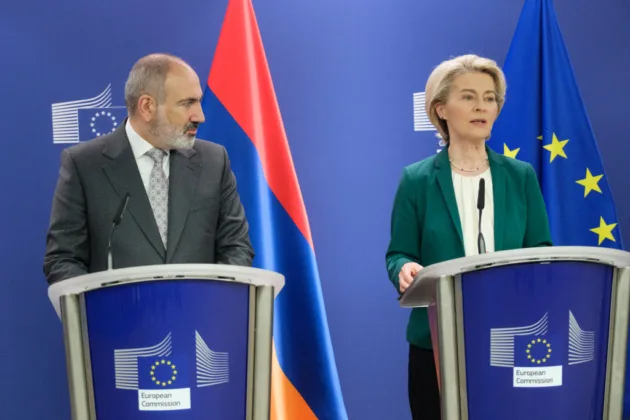
The annual EU-Western Balkans Summit has drawn senior figures from Brussels alongside the leaders of Europe’s largest economies, including French President Emmanuel Macron and German Chancellor Friedrich Merz. European Commission President Ursula von der Leyen and European Council President António Costa are also due to attend, with Montenegrin President Jakov Milatović hosting.
Montenegro and Albania have emerged as frontrunners for membership, outpacing neighbours such as Serbia and Bosnia, which lag on the reforms required by the bloc.
Costa, speaking in Belgrade on June 4, called enlargement towards the Western Balkans the EU’s “most important geopolitical investment”. He said the bloc and candidate countries would need to work harder and faster.
The drive has gained pace since Russia’s invasion of Ukraine in 2022 renewed interest in expanding the Union. Both Ukraine and Moldova have since joined the queue for accession alongside the six Western Balkan hopefuls — Albania, Bosnia, Kosovo, North Macedonia, Montenegro and Serbia.
EU Enlargement Commissioner Marta Kos has flagged the possibility of completing technical talks with Montenegro by the end of the year, which would clear the way for it to become the 28th member state by the end of 2028.
A government website promoting the “28 by 28” campaign describes the NATO member as a hub of European optimism, putting public support for membership at 80 per cent.
Montenegro, a tourist hotspot known for its old towns and beaches, adopted the euro in 2002 and applied to join in 2008, two years after it separated from Serbia.
Its progress stands in contrast to that of other candidates. Kosovo’s path remains among the most difficult, with five EU member states still refusing to recognise its independence.
Earlier in 2026, Kos warned that several Western Balkan states risked permanently losing hundreds of millions of euros in growth funds because of slow reforms, singling out Serbia for “backsliding”.
Serbian President Aleksandar Vučić, whose country has kept strong ties with Moscow, said he would still attend despite a diplomatic row with Montenegro. Albanian Prime Minister Edi Rama, who hopes to follow Montenegro into the bloc in 2029, is also among the regional leaders present.