




I have vivid memories of the Shah’s visit to Berlin on June 2, 1967. At the time, many media outlets were more interested in the Shah’s display of grandeur and in the elegance of his wife, Farah Diba, who for many years served as a fashion icon for countless women. Many Berliners were also pleased to receive visits from foreign dignitaries during an era marked by the Berlin Wall, barbed wire, and the Cold War. That was understandable. Yet there were also many who wished to draw attention to the regime’s human rights abuses. And that, and making your opinion being heard is, as we know, also part of democracy.
As one of the student representatives of the Free University of Berlin, I attended as an observer at the students` demonstration in front of Schöneberg Town Hall, where the Shah was paying a courtesy visit to then-Mayor Heinrich Albertz in order to sign Berlin’s Golden Book. The number of demonstrators outside the town hall was not large—as the photographs that remain available today clearly show—and the demonstration area was effectively cordoned off and closely monitored by numerous Berlin police officers.
This, however, was apparently not sufficient for the Shah’s SAVAK secret police, who evidently regarded demonstrations as an act of lèse-majesté. They jumped over the barriers into the ranks of the demonstrators and beat young men and women with long wooden clubs—all under the eyes of the Berlin police, who initially saw no reason to intervene against these violent Persian thugs, Prügelperser, despite the violence, brutality, and physical assaults taking place.
The people of Berlin and the students of that era will never forget what this outrageous conduct set in motion: The evening demonstration outside the Opera House on Bismarckallee, where one of the students, Benno Ohnesorg, was shot and killed by a Berlin police officer; the subsequent student unrest, whose participants were initially slandered as the aggressors by the Springer press and by police authorities; and the powerful boost this gave to the 1968 student movement.
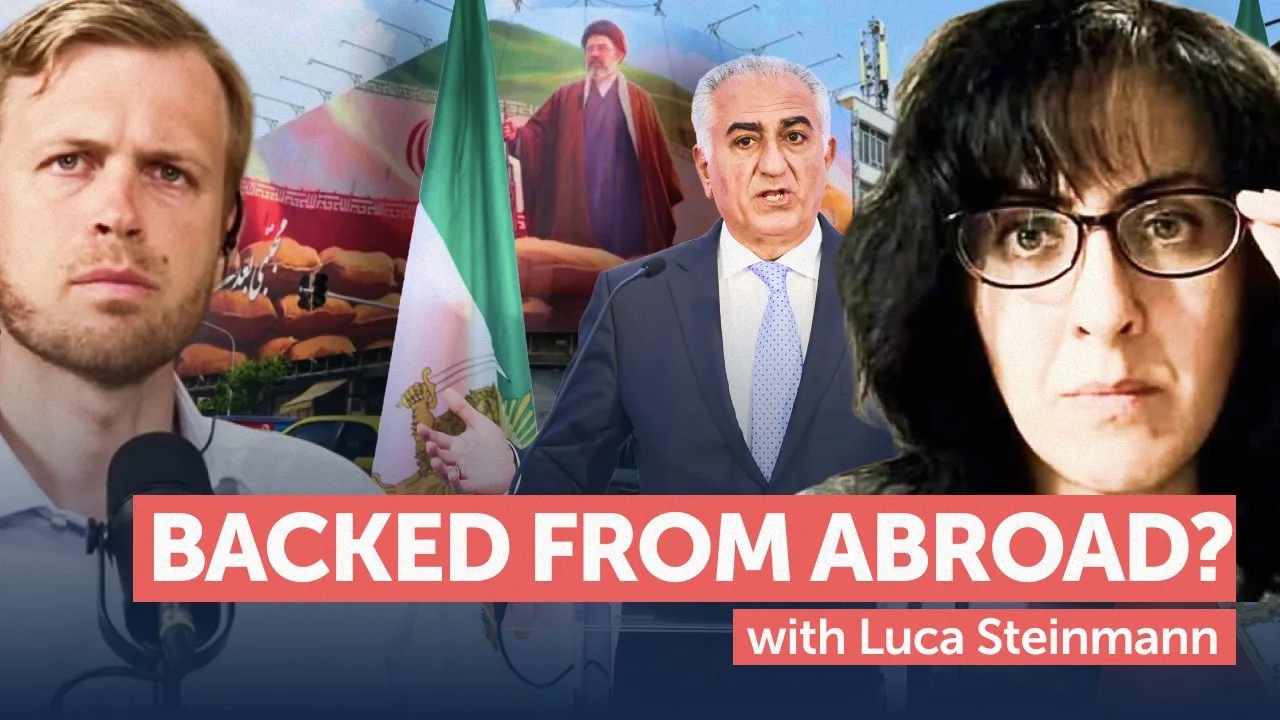
I remember all this now, because, in recent months, a striking and disquieting development has emerged: The reappearance of figures presenting themselves as agents of change for Iran’s future. Among them is Reza Pahlavi, son of the last Shah, now based in the United States. Until recently, his public presence was largely limited to jet set social prominence, with little evidence of sustained engagement in resistance activities or meaningful support for those risking their lives within Iran.
Today, by contrast, he has re-entered the political arena through highly organised, well-financed campaigns, portraying himself as a “facilitator of transition”. This raises pressing questions about the sources of both financial backing and political sponsorship behind such efforts. Frequently cited in this context are the names of President Trump and Prime Minister Netanyahu, alongside certain Gulf states pursuing their own strategic interests.
Some European politicians, along with segments of the Iranian diaspora, appear impressed by these developments, perhaps reflecting the broader difficulty of forging a unified strategy among opposition groups in exile.
What is particularly troubling, however, is the apparent willingness of many of Pahlavi’s supporters to overlook, or dismiss, the implications of his public statements. This is especially evident in his remarks concerning Iran’s Kurdish population, which suggest tendencies toward marginalisation and division. One would expect a self-proclaimed “honest broker” of transition to advocate reconciliation, inclusivity, and respect for diversity. Proposals for a democratic and federal structure acknowledging Iran’s pluralism would be both constructive and necessary.
Instead, his discourse appears to lean toward subordination, even in a prospective future order.
Equally disconcerting is his attempt to trivialise the documented authoritarianism of his father’s rule, dismissing criticism as mere “exaggeration”. Historical evidence tells a far different story. The Shah’s regime was marked by systematic repression, including the persecution of political opponents, lawyers, students, artists, and the widespread use of torture and killings. These abuses contributed directly to the revolutionary forces that led to his downfall and ultimately enabled the rise of the current clerical regime. Efforts to rewrite this history are not only inaccurate—they undermine the very foundations upon which a democratic future must be built.
Perhaps most revealing is Pahlavi’s silence in the face of troubling developments among his own supporters. The demonstration held in Regensburg last month is a case in point. There, organised groups of SAVAK sympathizers constituted a visible and active presence. Participants openly displayed symbols and insignia associated with SAVAK, the Shah’s notorious secret police, and distributed related materials, effectively glorifying an organisation synonymous with repression, torture, and murder.
SAVAK’s record of human rights abuses is well-documented, with thousands of victims and ongoing legal proceedings, particularly in the United States, continuing to shed light on its crimes. Against this historical backdrop, it is deeply troubling that such displays can occur publicly, even exploiting gaps in legal frameworks in countries like Germany. More troubling still is that certain political figures in Europe continue, despite such manifestations, to present the Shah’s son as a credible figure for democratic transition.
And yet, amidst these concerns, there is a glimmer of hope. Across the diverse and often fragmented Iranian diaspora, different groups are increasingly united in their scepticism toward Pahlavi’s project. This convergence, however tentative, may offer the foundation for greater cooperation among democratic forces.
Such unity, if realised, would not only strengthen support for the courageous people of Iran in their struggle for freedom, but also bring closer the prospect of a future Iran rooted in democracy, the rule of law, and a steadfast commitment to fundamental human rights.
Prof Dr Herta Däubler-Gmelin is the former Federal Minister of Justice in Germany