
The European Union has revived plans to sanction Patriarch Kirill, the head of Russia’s Orthodox Church, after Hungary’s new Government signalled it would drop a veto that blocked the move for four years.
His name was added to the bloc’s 21st package of sanctions against Russia, presented in Brussels on June 9, three diplomats confirmed to Euronews. The European Commission does not disclose who is on its blacklist until member states reach a final decision.
If approved, Kirill would face an asset freeze and a ban on entering the bloc. He has been accused of spreading propaganda to justify the war in Ukraine, and the Russian Orthodox Church under his leadership endorsed a text that described the invasion as a “Holy War”.
The European Union first proposed targeting Kirill in 2022, months after Russia launched its full-scale invasion, but Hungary blocked it three times on the grounds that it breached religious freedom. Hungary’s new Government, led by Prime Minister Péter Magyar, ousted Viktor Orbán in April and has taken a more pro-European line.
Sanctions require the unanimous backing of all 27 member states, and it remained unclear whether every capital would agree to target a religious figure. Names are often removed from draft lists to secure consensus.
The wider package is the largest set of listings in more than two years, with more than 170 proposed measures aimed mainly at Russia’s banking and energy sectors. It would freeze the assets of nearly 90 banks and ban dealings with 11 cryptocurrency platforms accused of helping Moscow evade restrictions.
On energy, the Commission proposed a temporary freeze of the price cap on Russian oil until January 2027, along with curbs on liquefied natural gas (LNG) and 30 more vessels from Russia’s shadow fleet. For the first time, it would also penalise ships that refuel or supply blacklisted vessels.
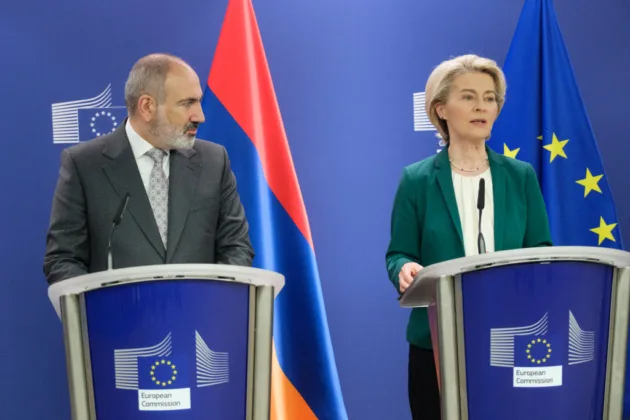
European Commission President Ursula von der Leyen said the pause was needed because the conflict between Israel, Iran and the United States had pushed up fuel prices and eased pressure on Moscow. The freeze would stop Russia profiting from the market shock, she said.
EU foreign affairs chief Kaja Kallas said the package targeted banks, oil traders and drone manufacturers, as well as companies in China, Türkiye and India accused of sustaining Russia’s war effort. “Brick by brick, we are collapsing the foundations of Russia’s war economy,” she said.
The measures would also bar current and former Russian soldiers from entering the bloc, the first time such a step has been proposed. Brussels aims to secure agreement by July 15 to avoid an automatic revision of the oil price cap.