Italy is preparing its most significant return to nuclear energy in nearly four decades, marking a major shift in the country’s industrial and energy strategy under Prime Minister Giorgia Meloni.
Speaking during a tense question session in the Senate on May 13, Meloni announced that Rome aims to approve a long-awaited enabling law for nuclear energy “by the summer”. That would be alongside implementing decrees designed to create the legal framework for restarting nuclear power production in Italy.
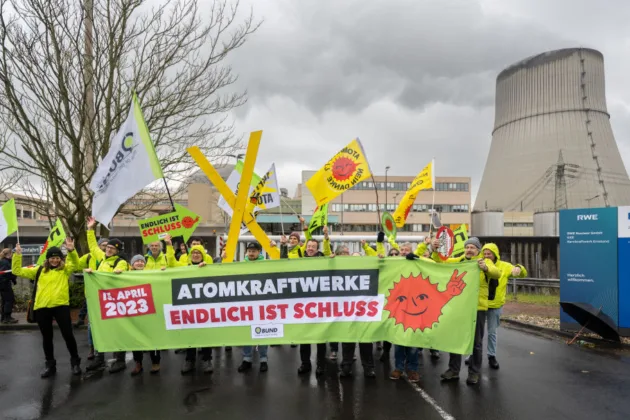
The announcement represents a historic reversal for a country that abandoned nuclear energy after the 1987 referendum held in the aftermath of the Chernobyl disaster.
A second referendum in 2011, following the Fukushima Daiichi nuclear disaster, reinforced public opposition and effectively froze any attempt to revive the sector.
Now, though, rising energy insecurity, geopolitical instability and Europe’s decarbonisation agenda are pushing Italy back toward atomic power.
Meloni framed the initiative as part of a broader national strategy aimed at reducing dependence on foreign energy supplies while guaranteeing industrial competitiveness.
According to the government, the legislation will cover advanced nuclear technologies, including small modular reactors (SMRs), research into fusion energy, decommissioning rules and radioactive waste management.
The move also places Italy closer to a growing bloc of pro-nuclear European countries. After years of hesitation, Rome formally joined the European Nuclear Alliance in 2025, an informal coalition of EU member states led primarily by France that promotes nuclear energy as a strategic pillar of Europe’s energy security and decarbonisation strategy.
Italy’s participation aligns it more closely with countries such as Poland and the Czech Republic, both of which see nuclear energy as essential to Europe’s “green” transition.
The Italian Government’s proposal must still pass through both chambers of parliament before becoming law.
Meloni’s centre-right coalition, though, currently holds solid majorities in both the Senate and the Chamber of Deputies, making approval likely unless internal fractures emerge within the governing alliance.
Even opposition parties that were historically sceptical have softened their positions amid growing concerns over industrial competitiveness and energy security.
If adopted, the reform would not trigger an immediate return to nuclear power generation, though.
Instead, the legislation would provide the executive with delegated powers to draft detailed implementing decrees regulating safety standards, oversight authorities, waste management and site selection procedures.
The first phase would, therefore, focus on rebuilding Italy’s nuclear governance framework and supporting partnerships linked to SMRs and next-generation reactor technologies, before any eventual decisions on plant construction or financing.
Politically, the momentum appears to be shifting. If approved, the reform would end decades of legislative paralysis and formally reopen the door to nuclear energy in one of Europe’s largest economies.