

The Council of the European Union has renewed for a further year its sanctions against people and entities linked to the former regime of Bashar al-Assad in Syria. At the same time it has lifted restrictive measures on several institutions now run by the country’s transitional authorities.
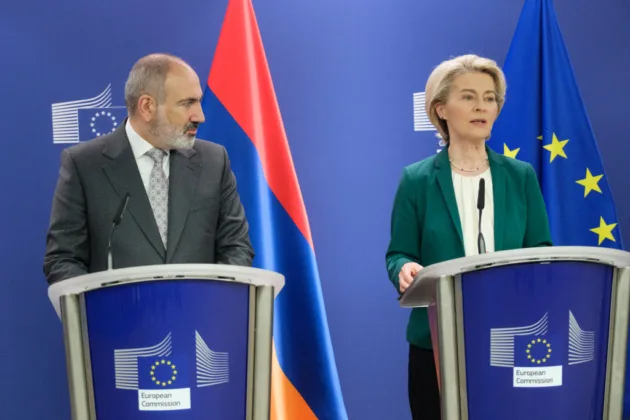
The measures aimed at Assad-era figures are set to remain in force until June 1, 2027, following the annual review of the sanctions regime by EU member states. The Council also removed seven entities from its list, among them the interior and defence ministries, which now operate under Syrian transitional president Ahmed al-Sharaa.
The decision keeps in place the freezing of assets belonging to designated individuals and bars EU citizens and companies from providing them with funds. Those listed are also banned from entering or passing through any member state.
EU foreign ministers signed off on the changes at a meeting in Brussels, the Council said.
The partial easing comes amid a gradual warming of relations between Brussels and Damascus. It follows a recent move by EU foreign ministers to lift all remaining economic sanctions on Syria, restoring trade links after about 15 years of partial suspension.
Earlier this month the Council also restored the full application of the EU-Syria Cooperation Agreement, which had been suspended since 2011.
The Council said networks tied to the former regime still held influence and posed a risk to the transition, as well as to national reconciliation and accountability efforts. It argued this justified keeping targeted measures in place.
The EU first imposed restrictive measures on Syria in 2011 in response to the al-Assad government’s repression of civilians at the start of the country’s civil war. After the regime fell in December 2024, the Council began on February 24, 2025 to ease a range of measures to make cooperation with Syria, its people and its businesses easier.
Al-Sharaa, who led the offensive that toppled al-Assad, has since pushed Western governments to drop the penalties imposed over more than a decade of conflict. The United States and the United Kingdom have rolled back much of their own Syria sanctions over the past year.
The EU has said the easing is reversible and depends on the conduct of the transitional government, including the protection of civilians from all ethnic and religious backgrounds. More than 350 names remain on the EU’s Syria asset-freeze list.