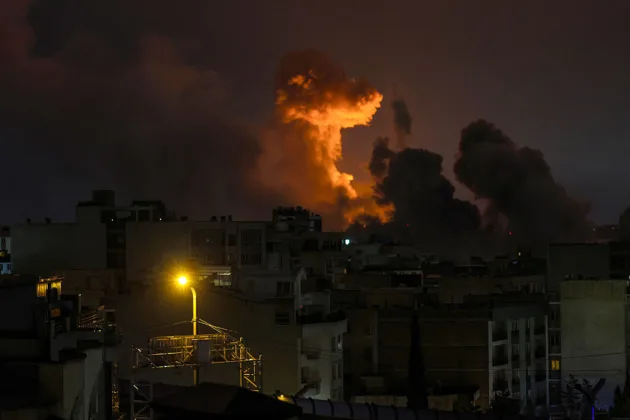

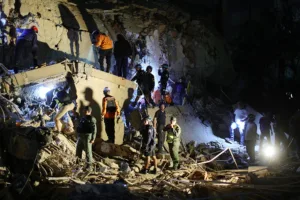

French President Emmanuel Macron hosted Lebanese Prime Minister Nawaf Salam at the Élysée Palace on April 21, in a highly symbolic diplomatic meeting held just ahead of planned indirect Israeli–Lebanese talks in Washington. The visit came amid escalating regional tensions, following the recent death of a French UN peacekeeper in southern Lebanon and renewed instability along the Lebanese–Israeli border.
Macron reaffirmed France’s support for Lebanon’s sovereignty, territorial integrity and the continuation of the ceasefire. He called for the truce to be strengthened and for existing monitoring mechanisms to be reactivated. He also urged Israel to abandon any territorial ambitions in Lebanon and stressed that a long-term solution must come through political negotiation that ensures security for both countries.
A key issue was Hezbollah: Macron argued that its disarmament should be carried out by Lebanese authorities themselves, with international support, as part of a broader political strategy. He also criticized Hezbollah for having dragged Lebanon into conflict.
Nawaf Salam, meanwhile, demanded the full withdrawal of Israeli forces from Lebanese territory and the return of prisoners and displaced civilians, while stressing Lebanon’s urgent humanitarian and financial needs.
The future of the UNIFIL peacekeeping mission in southern Lebanon was also discussed, as the prospect of its gradual withdrawal raises concerns about security along the border. France is reportedly exploring possible future security arrangements with European partners such as Italy, Spain and Germany.
France also pledged continued humanitarian aid and support for reconstruction in war-affected areas, including emergency supplies and long-term rebuilding efforts.
These discussions reflect the long historical relationship between France and Lebanon. France’s ties with Lebanon go back to the French Mandate period after World War I, when it administered the territory under the League of Nations. Since then, France has maintained strong political, cultural and educational influence in Lebanon and has often acted as a key diplomatic supporter during crises and conflicts.
France’s relationship with Israel, however, has become more strained in recent years, especially since the Gaza war and disagreements over Palestinian recognition. This has reduced France’s influence in current negotiations, with Israeli officials reportedly excluding it from the upcoming talks in Washington. France was reportedly explicitly excluded from the peace negotiations, notably after contacts between the Israeli Ambassador to the US and the Lebanese Ambassador to the US.
Overall, France is trying to continue to position itself as a mediator and key supporter of Lebanon.