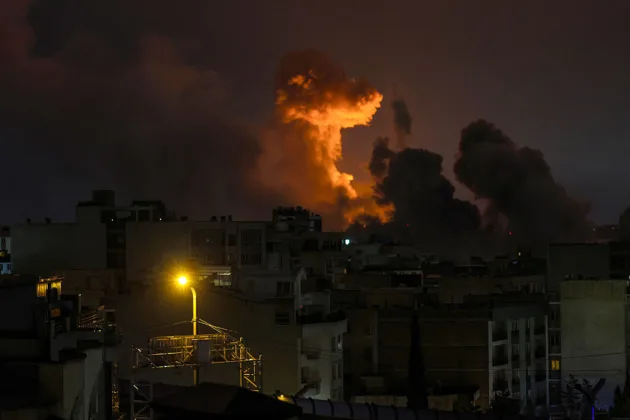







Last night Russian forces launched a large-scale drone attack on Ukraine’s critical energy infrastructure, plunging large parts of the southeastern Dnipropetrovsk (Dnipro) region into darkness and cold.
Ukrainian officials reported that more than 1 million people were left without access to heating, running water and in many cases electricity, as temperatures dipped below freezing.
Ukraine’s Deputy Prime Minister for Reconstruction, Oleksiy Kuleba, announced early today that repair crews were working intensively to restore services in the Dnipro region.
“Repair work continues … to restore heat and water supply for over a million subscribers,” he wrote on social media.
Authorities urged residents to stock up on water and prepare for the harsh winter conditions, with some areas potentially facing delays of up to a day for full restoration.
The Ukrainian Air Force reported that Russia deployed 97 drones in the overnight assault, of which air defences managed to down 70.
The remaining 27 struck various targets, primarily focused on energy facilities in Dnipro and the neighbouring Zaporizhzhia region.
While power was largely restored in Zaporizhzhia by early this morning, the impact in Dnipropetrovsk proved far more widespread and persistent.
In the city of Dnipro, local authorities extended school holidays by two days due to the outages.
Eight mines in the region were also affected, although workers were safely evacuated.
President Volodymyr Zelensky condemned the strikes, stating there was “absolutely no military rationale” in targeting civilian energy infrastructure during winter.
He described the attacks as part of Russia’s ongoing strategy to inflict suffering on the population and break Ukrainian resilience, urging continued international support for air defences despite ongoing peace negotiations.
I thank every repair crew and all the services that have been working since last night to restore electricity, heating, and water supplies in the Dnipro and Zaporizhzhia regions. As of now, power supply in the Zaporizhzhia region has been restored and is now operating on…
— Volodymyr Zelenskyy / Володимир Зеленський (@ZelenskyyUa) January 8, 2026
This latest barrage fits a pattern of intensified Russian attacks on Ukraine’s energy grid during the winter months, a tactic employed in previous years to compound hardship for civilians.
Ukraine’s private energy provider DTEK, which serves millions across the country, has repeatedly noted that the frequency and scale of strikes leave repair teams with little time to recover before the next wave hits.
It said Ukraine’s energy infrastructure has faced systematic targeting since the start of the conflict with Russia in October 2022, with attacks intensifying during winter months when electricity demand peaks for heating and lighting.