








Controversy erupted in France after girls and women were spotted yesterday wearing hijabs on the balcony of the French parliament.
The images quickly circulated on social media, first shared by right-wing outlet Frontières, prompting outrage from politicians in the National Rally (RN) party and other factions on X.
Marion Maréchal, niece of RN de facto leader Marine Le Pen and head of the right-wing movement Identity and Liberty, described the incident as a provocation. “It is unacceptable to tolerate this Islamist provocation in the National Assembly,” she said.
RN President Jordan Bardella stated that, if the party ever comes to power, it would ban such attire nationwide.
Hijabs are already banned in French public schools but wearing them elsewhere remains permitted, whereas Niqabs are prohibited in public spaces.
While hijabs cover the hair but leave the face visible, niqabs cover the entire face, leaving only the eyes exposed.
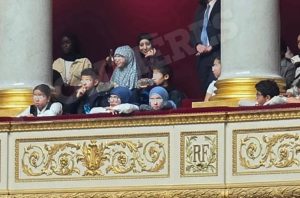
In response to the growing online debate, Yaël Braun-Pivet, President of the National Assembly, condemned what he called “ostentatious religious symbols”.
“At the very heart of the hemicycle, where the 2004 law on secularism in schools was voted on, it seems unacceptable to me that young children can wear ostentatious religious signs in the galleries,” she said.
“We had not been confronted with this situation in the past. I have called on everyone to exercise extreme vigilance so that this does not happen again. It is a matter of republican consistency,” she added.
Critics, though, argue that Braun-Pivet’s response misinterprets the French principle of secularism.
Marine Tondelier, leader of the Greens, accused authorities of Islamophobia.
“There are things that are allowed and things that are not allowed; it’s not forbidden. The Assembly’s ushers are very scrupulous, so if it had been forbidden, they wouldn’t have got that far,” she said.
Left-wing leader in the National Assembly, Mathilde Panot, criticised Braun-Pivet for “throwing these young people who come to visit our Assembly to the wolves of the far-right and the press.”
She added that her party was “alarmed by the growing servility to the racist theses of the far-right” in the public debate.
Some observers also pointed out what they saw as a double standard: Men have been seen wearing kippas, brimless skullcaps traditionally worn by Jewish males, in the National Assembly corridors without any controversy.
According to Article 8 of the General Instructions of the Bureau, visitors must “dress appropriately” and remain “seated, bareheaded and silent” while observing debates.
Wearing religious clothing is not explicitly prohibited.