The European Union is doubling tariffs on steel imports that exceed its new proposed lower quota.
The European Commission’s attempt to answer calls from a steel industry in crisis is worrying some that it could reopen trade conflict with Washington.
European Commissioner for Prosperity and Industrial Strategy, Stéphane Séjourné, presented the plan to the European Parliament in Strasbourg yesterday. “The European steel industry was on the verge of collapse,” he said.
“We are protecting it so that it can invest, decarbonise, and become competitive again.”
The proposal halves the amount of steel that can enter the bloc duty-free and raises the tariff on imports above those quotas from 25 per cent to 50 per cent. It replaces the safeguard system that expires in June 2026.
The EC says the measure aims to counter global overcapacity and “restore Europe’s strategic autonomy”.
Industry backs tougher defence. Karoliina Rasi, the head of Outokumpu, a Nordic stainless-steel producer, told Brussels Signal the same day: “We support the new steel trade measures as the old ones have not protected us enough.”
In a written statement, the group said the current safeguards “are not efficient enough” and that the EU industry faces “a challenging situation” due to falling demand and rising global overcapacity.
“Without firm action, Europe risks becoming the world’s dumping ground for cheap, high-carbon steel,” it wrote.
Eurometal, the Brussels-based federation representing steel distributors and service centres, also welcomed the move.
It said the new trade defence framework “correctly identifies global overcapacity as the core threat” and that the proposed “melt-and-pour” origin rule “will close long-standing loopholes used to re-route Asian steel into the EU market”.
Outokumpu asks the EC to adopt the new framework “urgently” before the current one expires, calling strong and permanent trade-defence measures “essential to protect Europe’s strategic industrial capacity and safeguard jobs”.
The new tariffs are not limited to any one country. They apply to all imports exceeding the quota, which the EC plans to set at around 18.3 million tonnes a year. Imports above that level will face the new 50 per cent duty.
The framework also introduces a “melt-and-pour” origin rule, forcing importers to prove where steel was first produced — a measure meant to block re-routed Chinese steel entering through third countries.
“These aren’t targeting any one country but are a general cut in quotas with tariffs for imports overshooting quotas,” Varg Folkman, policy analyst at the European Policy Centre, told Brussels Signal yesterday.
“Overcapacity is not solely a China problem in steel, although Chinese production is huge, so the EU aims at protecting the European industry in general.”
He said the tariff rise and quota cuts were chosen “because only targeting China would make it hard to stop tariff avoidance”.
Since the measures are general, they will also affect the US, which still applies a 50 per cent duty on EU steel, as imposed under President Donald Trump.
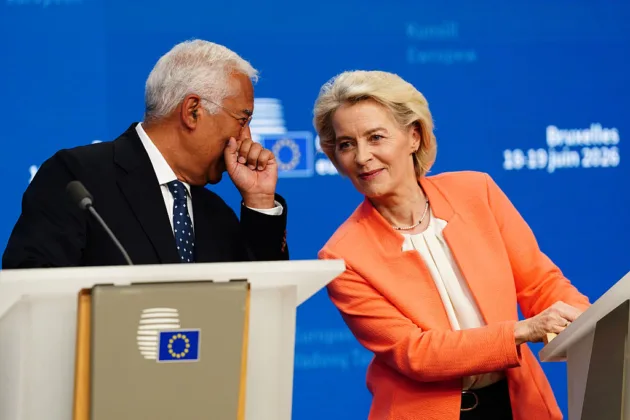
Steel was not included in the trade agreement signed in August between EC President Ursula von der Leyen and Trump, leaving the long-standing dispute unresolved.
Brussels fears the new EU tariffs could reignite that conflict. The EC said it is in contact with Washington and hopes to “find solutions between them”.
Folkman noted that “we may see some sort of arrangement in the coming months where they mutually increase quotas for each other or something similar”.
The steel industry has already faced a decade of decline. Since 2015, the European steel industry has lost about 270,000 jobs as cheap imports flooded the market.
European industry groups have repeatedly warned that Chinese steel, often sold below production cost, has “undermined” European producers.
Officials say the new regime will give the sector “breathing space” to invest in low-carbon production and align with the EU Green Deal.
But trade experts warn the step could face World Trade Organisation (WTO) challenges and retaliation from partners.
For now, Brussels says it will balance the higher steel tariffs by lowering duties on other goods to stay within global trade rules.
Europe’s steel mills, though, want speed. “Europe needs to keep its industrial base competitive and a new and more efficient mechanism is needed,” Outokumpu said.