




The EU would lose its positive trade balance if stripped of car exports, French automaker Renault’s vice-president Jean-André Barbosa warned during a conference in Brussels.
This meant that apart from its car industry, Europe is no longer an exporting continent, the senior executive said.
“Without the automotive industry, [there is] no positive balance for Europe,” Barbosa said. However, with automobiles, “on the production factor we have a competitive advantage,” he said.
In other sectors, the EU runs trade deficits, importing more than it exports. It is not the case, though, for cars, as European carmakers consistently generate a large trade surplus, offsetting losses elsewhere.
That “competitive advantage” comes from scale, established brands and technology, argued Barbosa.
European car-making firms dominate in premium vehicles and high-end engineering, which command global demand and higher margins, and give the sector an edge over rivals elsewhere.
Yet the sustainability of that edge is not uncontested. Europe depends heavily on Chinese capital and technology in electric vehicles and batteries, raising questions over how long the EU’s advantage can remain.
According to the European Commission, the automotive sector accounts for 7 per cent of the EU’s GDP. It employs 13.8 million people and represents Europe’s largest source of private R&D spending.
More than 2.6 million Europeans work directly in vehicle manufacturing. Carmakers are also Europe’s most competitive global exporters, with high-value shipments to China, the United States and beyond.
However, this sector is increasingly under threat, with Europe underestimating the feedback loop between tariffs, trade, and innovation, warned the Kiel Institute’s Holger Görg at a conference organised by the economic think tank Bruegel in Brussels September 18.
“What are the implications of us restricting trade with China? We are not enough concerned about it,” he said. “Mostly we focus on tariffs, but these also have impacts on us. Trade flows are interconnected, and innovation flows also stimulate trade.”
For its part, the European Commission insists it is alive to the risks.
Brussels has pledged fresh R&D support for carmakers, and is pushing for global harmonisation of standards to safeguard Europe’s market share.
Although the EU writes that “the automotive industry is crucial for Europe’s prosperity”, pointing to the sector’s role in growth, employment, and technology, industry voices remain sceptical. Earlier this month, the European carmakers’ representative ACEA warned that new “Made in Europe” rules aimed at supporting the sector risk backfiring.
Local-content requirements could distort the fragile supply chains and damage competitiveness unless applied cautiously, said the body. Instead, it urged the EU to concentrate on the basics first: Cheaper energy, faster permitting, skilled labour and targeted incentives.
Meanwhile, Turkey has introduced new car tariffs, adding to the complexity of Europe’s trade environment.
Tariff avoidance schemes are already shaping the market, Varg Folkman, economic policy analyst at the European Policy Centre, told Brussels Signal on September 22.
Chinese cars being produced in Turkey will not get significantly hit by the EV tariffs since they target EVs produced outside of the country.
This can also happen in EU countries, as China has plants in Europe too, for instance the BYD plants in Hungary.
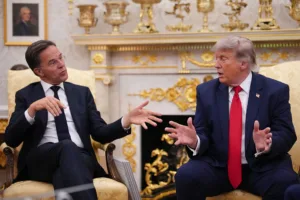
“Moving production to your country is often what is wanted”, Folkman said. “See Trump, for instance: He wants EU car makers to move production to the US and is using tariffs to get them there.”
But the benefits from this may be slim. “If Chinese car makers move to the EU, it can mean more jobs in the EU,” Folkman said. “The problem is that you see manufacturing capacity being moved to the EU, but only the final assembly, which brings very little in terms of value added and tech spill-over. Additionally, the Chinese often bring workers and materials with them from China, leaving little benefit for the EU and making it seem like a tariff avoidance scheme.”
That concern may now cause the EU to revise its screening mechanism for foreign direct investment.
Brussels has signalled it will discuss whether to condition approvals on genuine value-added production in Europe, or alternatively, require Chinese investors to enter joint ventures with EU companies.