



Order intake for the German manufacturing sector has unexpectedly fallen, according to data published by the Federal Statistical Office.
Economists on August 5 called the June numbers disappointing and said the decline reflected a slower-than-expected economic recovery for Europe’s ailing biggest economy.
Adjusted for inflation and seasonal effects, the order intake fell by 1.0 per cent in June 2025 compared to May 2025, when the new orders had already been 0.8 per cent lower than in April.
The decrease mainly stemmed from a drop in the value of large orders – which tended to fluctuate over time — while smaller orders showed a slight increase.
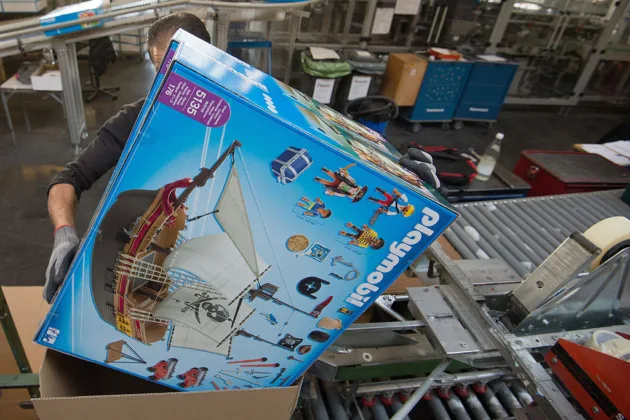
The biggest losses (23.1 per cent) were recorded in the “other vehicles” segment, which includes aeroplanes, ships, trains, and military vehicles.
The automotive industry (minus 7.6 per cent) and the metals sector (minus 12.9 per cent) performed poorly as well.
The biggest growth in new orders stemmed from the electrical equipment industry which recorded a plus of 23.5 per cent.
While order intake from within Germany grew by 2.2 per cent those from abroad fell by 3 per cent. This was mainly due to a drop in order intake from outside of Europe which slid by 7.8 per cent – reflecting the effects of the new US tariff policy. Orders from the Eurozone grew by 5.2 per cent.
The unexpectedly bad figures have dampened hopes of a speedy economic recovery in Germany, even though a poll among manufacturers in July showed an improvement in sentiment among companies.
Jörg Krämer, chief economist at Commerzbank, told newspaper Welt on August 5: “Order intake, excluding highly volatile large orders, has recovered only slightly from its slump in the previous month.
“This is disappointing and fits in with the general picture that leading indicators are recovering only very hesitantly.”
He added that the strong economic growth of 1.4 per cent expected for 2025 could only come from hugely increased State spending, as the government had failed to change Germany’s economic policy to jumpstart the private sector.
Jens-Oliver Niklasch, an economist with bank LBBW, told Welt the numbers were “a slight disappointment” and underlined that the German economy was struggling.
He cautioned that the effects of the US tariff policy were not yet reflected in the numbers: “These figures do not yet show the effects of the tariff compromise – if you can call it that – between the US and the EU,” he said.
“We will have to wait another two or three months for that.”