



International steel giant ArcelorMittal said it would no longer pursue plans to “decarbonise” its German steel mills.
Instead, it would move production to countries “that can offer a competitive and plan-able electric power supply”, specifically France, the Luxembourg-based firm said.
On June 19, ArcelorMittal announced it was cancelling plans to modify its flat steel mills in Bremen and Eisenhüttenstadt (Brandenburg) for the production of low-emission “green” steel.
The original plan was to use hydrogen produced by renewable energy sources to power electric arc furnaces – instead of the classic coal-fired blast furnaces used for the energy-intensive production of steel.
The cost of the conversions were originally estimated at €2.5 billion by the company. In February 2024, it was announced that the German Government would subsidise the project with €1.3 billion in public funds.
Several other steel producers including German firms ThyssenKrupp and Salzgitter received similar grants.
According to ArcelorMittal, the contract with Berlin required a start of the conversion work in June 2025, which made it necessary for the company to officially step back from the project now.
“Due to the market situation and the lack of profitability of a CO2-reduced steel production, we cannot continue with the investments,” ArcelorMittal said in a statement on June 20.
“Green hydrogen is not yet a reliable power source,” added.
The company said it would, though, retain plans for the conversion of the two German factories to electric arc furnaces “to be prepared when the production with electric furnaces is economically sensible there”.
For the time being, ArcelorMittal will shift its focus on other countries. The steel group said it would now build its next electric arc furnace in Dunkerque, France – since electricity prices were lower there.
“The current electricity prices in Germany are too high,” it said.
In 2024, Germany had the third-highest electricity prices for non-household consumers in the European Union at €0.24 per kilowatt hour (kWh), according to Eurostat.
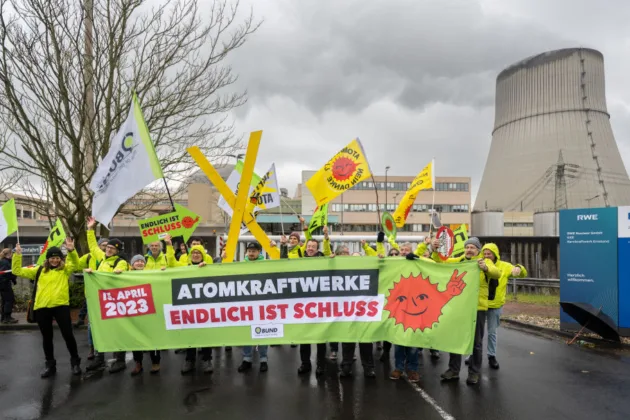
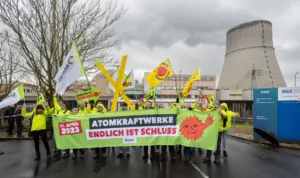
In France, the price was €0.18 per kWh. France has a large fleet of nuclear power plants while Germany shut down the last of its 17 reactors in 2023 to rely on solar and wind power instead.
ArcelorMittal’s decision was met with shock in Germany.
Social Democratic Party MP and Bremen Mayor Andreas Bovenschulte, said the move was “a serious blow for the business location”.
Christoph Canne, director of energy NGO Vernunftkraft, said the steel giant’s decision should serve as a wake-up call.
“Economically, a steel industry cannot exist without favourable energy prices. This has been torpedoed by the energy transition and the nuclear phase-out,” Canne said.
“The bomb that ArcelorMittal has set off today is nothing more and nothing less than a harbinger of the end of steel production in Germany.”