


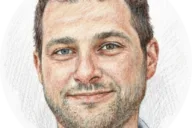
State media outlets in Belgium have expressed concern that reporting on the serious health condition of a Vlaams Belang politician may contribute to the “humanisation of the far-right”.
In early April, Guy D’haeseleer, the Mayor of Ninove in the Flemish province of East Flanders and a prominent figure within Vlaams Belang, was hospitalised with acute liver failure caused by hepatitis.
Since then, he has remained in intensive care and urgently requires a liver transplant. A compatible donor has yet to be found.
Due to the critical nature of his condition, combined with his political profile, updates on his health and how his family has been coping have featured heavily in the news.
Like many countries, Belgium has faced a severe shortage of donor livers and long waiting lists.
Regarding D’haeseleer, though, some journalists within State media have started to question the extensive coverage of his condition.
They have argued that such reporting risked fostering public sympathy for D’haeseleer and, by extension, the Vlaams Belang party, which the Left has labelled “far-right”.
“Not a day goes by without the Flemish media mentioning the state of health of the far-right Mayor,” Francophone news channel RTBF stated.
“Between the humanisation of the far-right and information to the public, where should the limit be drawn?”
The journalists concerned were inspired by an April 14 piece on VRT NWS, the Dutch-speaking State broadcaster, where the News Ombudsman at the station, Judit Verstraete, spoke about the question of the perceived excessive focus on D’haeseleer’s health.
“One may well ask whether that [media attention] is necessary. Surely some restraint seems appropriate here now,” she said.
“It remains a very personal situation. Just because the information is available does not mean it has to be brought out. The editors should therefore consider with every update whether it transcends the personal situation sufficiently to report on it.”
On RTBF, it was noted that many in the media broadly reported on the case under headlines including My family even came to say goodbye, Human solidarity overcomes political differences and The difficult quest for a donor of faith: ‘We lack organs’.
Laura Jacobs, a political scientist from the University of Antwerp specialising in the “far right”, said: “It might seem surprising at first glance” that a Vlaams Belang politician received so much attention.
She added that he was already known to the broader public before his illness, due to his political success in Ninove, where he gained an absolute majority. Jacobs also said Flemish media tended to “personalise” its reporting about “famous” people.
In October, she had written that the media should not approach D’haeseleer on a personal level but “be critical, use fact-checks and substantive rebuttals”.
A spokesperson for Vlaams Belang told Brussels Signal on April 18: “What on earth are the Francophone media focusing on, while this man is fighting for his life in hospital? This is nothing short of disgraceful.”
Despite being the second-biggest party in the country, Vlaams Belang has been placed behind a cordon sanitaire at the national level, meaning all other parties have refused to work with it.
In the media, the party has only been allowed to appear on current affairs programmes — and thus is severely underrepresented in the broadcast media compared to its voter share.
Vlaams Belang media treatment in Flanders has improved in recent times compared to the past, when all coverage was uniquely negative. In Wallonia, though, this negative trend has continued and exclusion remains the norm.
RTBF has not limited its approach to Belgian politicians only. In January, it famously refused to broadcast the inauguration speech of US President Donald Trump live, having claimed he spread a “racist, far-right, xenophobic” message.
The station decided to broadcast his speech slightly later than live, apparently to allow time for analysis to be undertaken.
Belgian news channel RTBF refused to broadcast the inauguration speech of US President Donald Trump live, having claimed he spread a “racist, far-right, xenophobic” message. https://t.co/FPYYSowN4H
— Brussels Signal (@brusselssignal) January 23, 2025