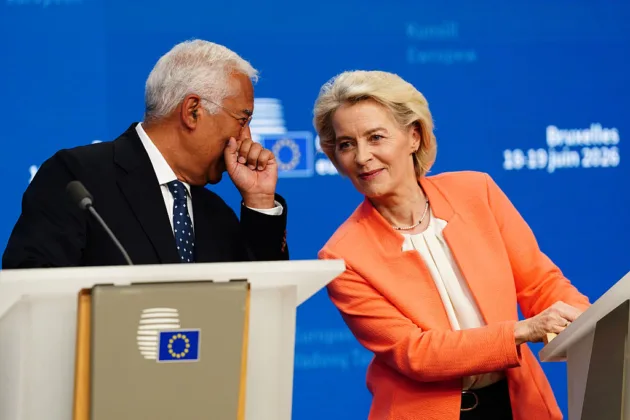





The European Union was planning a “digital fitness check”, aiming to look at ways of reviewing some of its most important tech laws, said European Commissioner for Tech Sovereignty Henna Virkkunen.
That was in response to complaints from ebusiness about the high number of EU digital regulations implemented in recent years.
The Dutch Ministry of Economic Affairs hosted the D9+ Ministerial Meeting in Amsterdam on March 27 attended by ministers of 13 of the most digitised EU member states and Virkkunen.
The 13 countries signed a declaration calling to “remove barriers” and “simplifying EU rules and procedures”. They stressed the need for a “reviewed digital rulebook” that was “deregulated where possible” and “avoids unnecessary red tape”.
Speaking to journalists outside the meeting, Virkkunen said she had no plans to water down laws such as the Digital Services Act (DSA), which governs content moderation, the Digital Markets Act (DMA), which governs big tech platforms, or the AI Act, which applies risk-based rules to artificial intelligence, as part of a review of the rules.
“Everybody who is doing business in Europe has to respect our rules here. European companies but also American and Chinese,” she said.
Her comments came after the commission announced it would limit its DMA fines on Apple and Facebook-owner Meta and drop a separate case against Apple entirely.
The fines were imposed on behalf of non-compliance to DMA provisions designed to ensure fair digital markets.
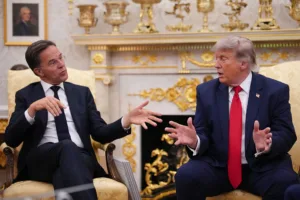
US President Donald Trump had already warned that he considered these fines “overseas extortion” and that “reciprocal” measures would be taken. Regulations such as the DMA were a “non-tariff trade barrier” that he said triggered the huge wave of US tariffs set to be revealed and imposed on April 2.
After trimming fines for Apple and Meta, the commission was also considering “amending some parts of them where we see that there are, for example, overlapping parts, and we are also looking at how we can cut red tape and bureaucracy, especially for example, reporting obligations”, according to Virkunnen.
In response to complaints that the “flood” of EU tech regulations taken in recent years might undermine the already fragile European businesses situation regarding competitiveness, an EC spokesperson told Brussels Signal that “the Commission services have been working and continue to work at full speed on all open investigations”.
How the commission planned not to “water down” tech regulation while addressing EU business complaints, transatlantic tensions and general sustainability of digital competition laws would likely become clearer after the Trump unveiled his April 2 tariffs regarding Europe, experts said.