



Belgium has officially become a member of the European Alliance for Nuclear Energy (EANE), reversing more than two decades of anti-nuclear policy that began in the 1990s.
“Under my leadership, Belgium is leaving its status as a mere observer to join the Nuclear Alliance as a full member. After decades of uncertainty, our country is now firmly positioning itself as a leader in European nuclear energy!” Belgium’s energy minister Mathieu Bihet said on February 25 on X.
Sous mon impulsion, la Belgique quitte son statut de simple observateur pour devenir membre à part entière de l’Alliance du nucléaire. Tournant la page de décennies d’hésitations, notre pays fait ajd le choix de se positionner comme un acteur clé du nucléaire européen !
?????
— Mathieu Bihet (@BIHETMathieu) February 25, 2025
A day earlier, Bihet had announced that Belgium had officially joined the European “nuclear alliance”, a group that promotes nuclear energy initiatives within the European Union. The alliance was founded in February 2023 under France’s leadership.
The group comprises 11 countries: Bulgaria, Croatia, Czech Republic, France, Finland, Hungary, the Netherlands, Romania, Slovakia, Slovenia and Sweden, all working to strengthen their energy co-operation.
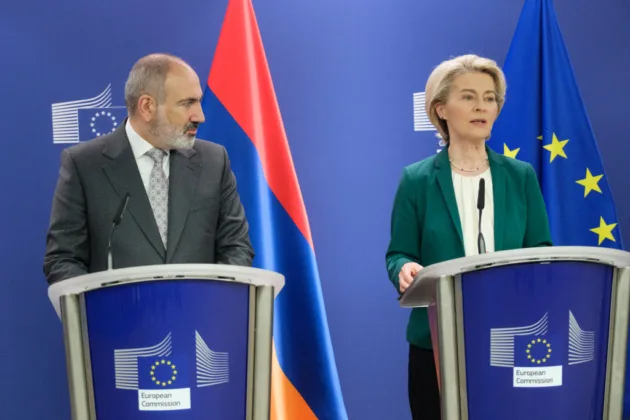
On February 20, in a statement signed by Belgium, EANE called for the inclusion of nuclear in Europe’s sustainable energy plan following a meeting with the European Commission.
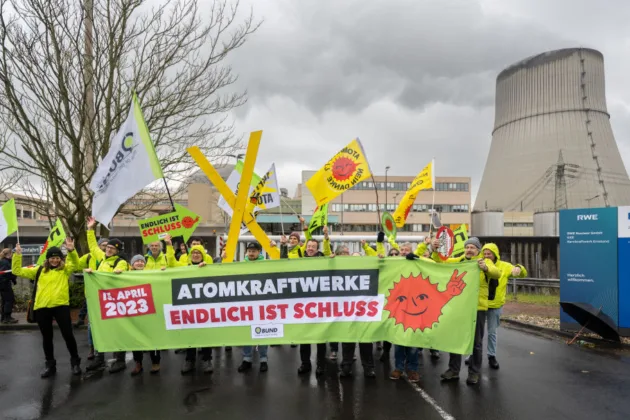
Belgium’s nuclear exit began under former Belgian prime minister Guy Verhofstadt and was formalised into law in 2003.
The legislation prohibited the construction of new reactors and set a timeline for decommissioning existing ones.
Current Prime Minister Bart De Wever’s government had been determined to undo that legacy.
The new coalition government has set a goal of generating 4 GW of nuclear power with the construction of the first small modular reactor in Belgium.
It aimed to amend the nuclear exit law, facilitate the construction of new nuclear plants and extend the life of the Doel 4 and Tihange 3 reactors by at least 10 years.
That was in addition to the existing 10-year extension decided by the previous government, thus making it a 20-year extension.
But reversing decades of energy policy was not likely to prove a simple task.
Nuclear reactor Doel 1 was permanently shut down on February 14, while Doel 2 and Tihange 1 were scheduled to close in the autumn of this year. De Wever said he wanted to extend the remaining nuclear reactors for 10 years.
Nuclear operator Engie has opposed De Wever’s plans.
It said it was concentrating on decommissioning the already shut-down nuclear plants, safely taking offline reactors that will cease in 2025, while extending Doel 4 and Tihange 3 until 2035.
Keeping nuclear power plants open even longer was “unthinkable”, said Engie Belgium CEO Vincent Verbeke in January.
Engie stated that nuclear power was no longer part of its strategic goals, making it clear that the company was no longer investing in the sector and was instead focusing on renewable energy.
That has left the new government with a tough choice: Either find a new operator for the nuclear plants or move towards nationalising them to allow for further life extensions.
Bihet has pushed back, saying recently: “We cannot allow a monopolistic player to dictate the energy ambitions of a sovereign state under the guise of strategic decisions. Belgium’s energy future will be determined by parliament, not by Engie’s board of directors.”
While the government has been pushing to extend nuclear power, the absence of a plan or agreement with the energy operator meant that in Belgium decommissioning has proceeded as originally planned.
Belgium is not the only EU country opting to reverse the phase-out of nuclear energy.
On February 14, the Spanish Congress approved a proposal presented by the right-wing People’s Party calling for the government to implement a series of measures that would reverse the country’s decision to phase out nuclear power.
Spain’s nuclear plants were scheduled to shut down by 2035.
Prices for electricity in central Europe have skyrocketed to record highs, as German renewable sources fell short of meeting demand. https://t.co/jcEpCowksP
— Brussels Signal (@brusselssignal) December 12, 2024