






Meta CEO Mark Zuckerberg has ignited a transatlantic debate over the treatment of US tech companies in Europe.
The chief of the firm that owns Facebook and Instagram has urged the incoming US Government to intervene over what he said he saw as unfair penalties imposed by the European Union.
“If some other country was screwing with another industry that we cared about, the U.S. government would probably find some way to put pressure on them, but I think what happened here is actually the complete opposite,” he said.
Speaking on the Joe Rogan Experience podcast on January 11, Zuckerberg criticised the EU’s regulatory actions, which have resulted in more than €30 billion in fines for US tech firms over the past two decades.
Referring to the EU’s anti-trust measures as “almost like a tariff”, he argued those fines undermined the strategic advantage of US technological dominance.
“I think it’s a strategic advantage for the United States that we have a lot of the strongest companies in the world, and I think it should be part of the U.S. strategy going forward to defend that,” he claimed.
Zuckerberg expressed optimism that the incoming President-elect Donald Trump administration would better defend US interests than what he perceived as the outgoing President Joe Biden government’s inaction. “I think he just wants America to win,” Meta CEO said about the incoming president.
Meta has taken the brunt of EU regulations. In November, the company was fined €797 million for imposing unfair trading conditions on ad service providers.
At the same time, the firm announced the termination of its third-party fact-checking programme and diversity, equity and inclusion initiatives, pivoting towards a “community notes” model.
That strategic shift has fuelled speculation that Zuckerberg was attempting to align with the incoming Trump Republican administration. His party has often criticised tech platforms for alleged censorship on a left-leaning bias.
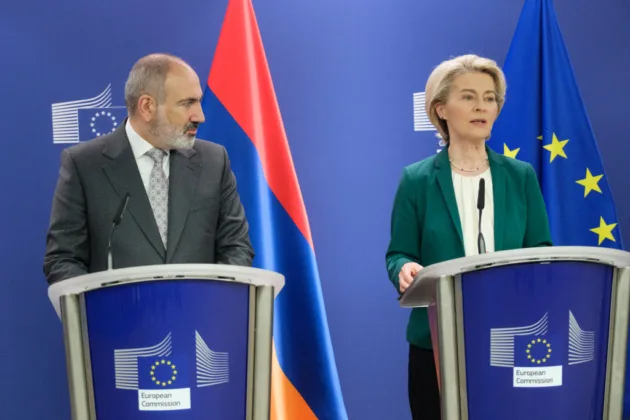
European Commission Vice President Henna Virkkunen has refuted Zuckerberg’s claiming they were misleading and unfounded.
On January 11, she defended the EU’s Digital Services Act (DSA), saying: “Social media platforms play an important role in people’s daily lives, but they also have a huge social and economic importance and influence. In Europe, we want to create a digital environment that is safe and fair.
Social media platforms play an important role in people's daily lives, but they also have a huge social and economic importance and influence. In Europe, we want to create a digital environment that is safe and fair.
— Henna Virkkunen (@HennaVirkkunen) January 11, 2025
“Our task is to make sure that European citizens rights are respected and our legislation is followed,” she added in her X profile.
The DSA is one of the most stringent tech laws globally, addressing content moderation, transparency, and platform responsibilities.
The latest regulatory clash has unfolded against the backdrop of the EU’s Competitiveness Compact Initiative. That strategy is set to be unveiled just days before Trump’s return to the White House on January 20.
The initiative was designed to address the widening technological and economic gaps between the EU and its primary rivals, the US and China.
Drawing from a blueprint initially proposed by former European Central Bank president Mario Draghi, the plan seeks to enhance the EU’s economic security, reduce energy dependency and modernise the bloc’s industrial base.
Central to this effort is the Clean Industrial Deal, scheduled for implementation in February, designed to accelerate the “green” transition.
It ties into broad EU goals, including a 90 per cent reduction in greenhouse gas emissions by 2040, building on its existing target of a 55 per cent reduction by 2030.
Despite these ambitions, Europe faces numerous structural challenges threatening its global tech competitiveness.
The EU has set a goal for 90 per cent of its small and medium-sized enterprises (SMEs) to achieve essential digital competencies by 2030.
That has fallen 30 points below target so far, with cloud computing, big data and AI adoption rates significantly lower than anticipated, according to official EU data.
European leaders Ursula von der Leyen and António Costa reaffirmed EU democratic values and transatlantic ties in a joint statement to Donald Trump and Elon Musk on January 9. https://t.co/DlV1B7YBRw
— Brussels Signal (@brusselssignal) January 10, 2025