





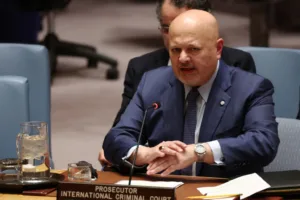





Olivér Várhelyi, Hungarian European Commission candidate for the Health and Animal Welfare portfolio, has failed to win the parliament’s approval to take up his position.
The Hungarian will now have to undergo a second round of written questions after left-wing parliamentarians targeted him over the issue of abortion, which they described as “a woman’s right” that was “under threat” on the evening of November 6.
This is despite the issue not being an EU competency.
He had promised to push through the Critical Medicines Act if implemented in his first 100 days on the job if approved, build on the European Health Union and prioritise preventive health measures.
He said he wanted to ensure that critical treatments and medicines were available and that clinical research would continue to thrive in the European Union. He committed to using the “One Health” concept, which balances the health of people, animals and the environment.
Várhelyi promised to propose a new European Biotech Act and launch a revision of EU medical devices legislation, welcomed patents and indicated a more strict approach to tobacco products rules.
He also stressed the importance of clear food labelling and proposed mandatory origin labelling, balancing that with ethical considerations on food technologies such as lab-grown meat. He also said he wanted to work on a phase-out of animal cages.
After grilling the Commissioner-designate for more than three hours, the MEPs refused to give the green light, with politicians upset that he did not offer “guarantees” on abortion.
Some other issues were also brought up, Renew Group MEPs mentioned tackling anti-microbial resistance and rare diseases and the stepping up of vaccination coverage. They also said there was a lack of commitment regarding animal welfare and that concrete proposals have not been made.
Their members’ main issue, as made clear on social media, was abortion. Renew shared a clip of an emotional Stine Bosse MEP asking if her daughter would enjoy the same rights as she had to abort a baby.
?Hearing of Oliver Varhelyi @BosseStine is challenging his commitment to upholding women’s rights across ??, particularly in countries with restrictive laws like ??.
?️Can you promise that I can guarantee my granddaughters that they will enjoy the same rights as I have? pic.twitter.com/VY5MFiB6mi
— Renew Europe (@RenewEurope) November 6, 2024
A similar criticism came from the Socialists and Democrats (S&D) MEPs. They said Várhelyi seemed “too business-focused and lacked commitment to animal welfare”.
They added that he “fell short on women’s health and reproductive rights”.
Ahead of the hearing, on October 30, S&D published a press release, calling his legacy on enlargement “disastrous”.
On social media the group posted a clip of MEP Christophe Clergeau who pushed for a commitment to defend so-called sexual reproductive rights across the EU — “including the right to abortion, and to fighting discrimination against transgender people”.
Hearing with Olivér Várhelyi | S&D VP @clergeau asks the Commissioner-designate for Health and Animal Welfare to clearly commit to defending sexual reproductive rights across the EU – including the right to abortion, and to fighting discrimination against transgender people. pic.twitter.com/ynAsn0kcSv
— S&D Group (@TheProgressives) November 6, 2024
In their final assessment, the Greens MEPs said: “Olivér Várhelyi does not convince.” They also blamed him for not being “concrete” about plans and “lacking ambition”.
Abortion was also high on their list.
Várhelyi is the only Commissioner-delegate so far not to have been approved after a first hearing.
He has until November 11 to respond to the MEPs’ questions. After that, co-ordinators will meet again; if they do not reach a decision, the full committees will vote, requiring a simple majority for approval.
Csaba Dömötör, Hungarian MEP for the Patriots for Europe Group, was not impressed by the criticism of his countryman. He told Brussels Signal on November 7 it was “a political circus and a witch hunt”.
According to Dömötör, the European People’s Party (EPP) and the left-wing parties had decided on their opposition to Várhelyi ahead of the hearing and it had nothing to do with his competence or expertise. Instead, he claimed, it was a reflection of their feelings towards the Hungarian Government.
“The verdict was made before the trial,” he claimed.
Dömötör said such behaviour “was harmful to European democracy and values” especially when the EU needed to tackle so many crises.
He further added that MEPs wanted an apology from Várhelyi yet again, for calling them “idiots” in a hot-mic moment in 2023.
Várhelyi was “very much prepared” for the hearings, Dömötör said, “more than average”.
“Others have possible corruption cases, don’t respond to questions, or are susceptible to lobbying influence. It is all part of the double standards,” he claimed.
Making things worse, Dömötör said, was that abortion was not a European competence but a national one, adding that the abortion law had not fundamentally changed in Hungary for decades.
Hungarian abortion law is defined by Act LXXIX of 1992 on the Protection of Foetal Life. Under this, abortions are typically permitted until a foetus reaches 12 weeks. In rare cases, the limit can be increased to 24 weeks.
Since its inception, no major changes have been made to the legislation, but the Conservative Hungarian Government has organised campaigns promoting the right to life. It also approved a family protection action plan, aimed at increasing the national birth rate, as the country is, like many Western countries, having babies under the replacement rate.
The law gave individual hospitals the right to refuse to carry out abortions.
In 2022, the government also introduced a mandatory ultrasound bill, where women who wanted to have a termination have to listen to the foetal heartbeat before they end the life of the unborn baby.
Over recent years, the number of reported abortions in Hungary has dropped while the fertility rate has gone up, although that is still fewer than reported deaths, which is set to cause demographic trouble in the long term should it continue.