
Former German chancellor Angela Merkel’s memoirs, Freedom: Memories 1954–2021, offer a look at her approach to global leadership, including her relationship with Donald Trump during his first term as US president.
In the book to be published on November 26, Merkel revealed she sought Pope Francis’ advice shortly after Trump’s election victory in 2016, mainly as she worked to convince him not to abandon the Paris climate accords.
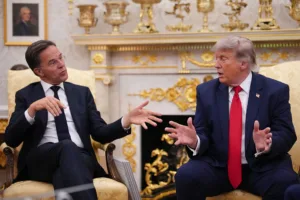
The challenges stemmed from Trump’s transactional worldview, shaped by his property-developer background: “He viewed everything through the lens of a property developer: Each plot of land could only be sold once and if he didn’t get it, someone else would,” she wrote.
During her conversation with the Pope, Merkel sought guidance on navigating relationships with individuals holding “fundamentally different views”. According to her account, the pontiff quickly understood her reference to Trump’s climate stance and offered this advice: “Bend, bend, bend, but make sure it doesn’t break.”
The memoir also underscored Merkel’s influence on the global stage. The US launch will feature an event in Washington, alongside former president Barack Obama, reflecting their strong partnership during Merkel’s tenure.
While she left office in 2021 as one of the most prominent Europe’s leaders, she has been criticised for her energy policies and reliance on Russian gas, with some arguing those decisions paved the way for the Kremlin’s invasion of Ukraine in 2022 and contributed to Germany’s current economic struggles.
Despite these criticisms, Merkel has remained unapologetic about her policies and has largely retreated from public life.
In the memoir, she reflected on her complex relationship with Russian President Vladimir Putin, whom she described as profoundly fixated on respect and recognition. “I saw him as someone who didn’t want to be disrespected, always ready to lash out,” she wrote. “You might find that childish or contemptible but it meant Russia never vanished from the map.”
She recounted one foreboding remark Putin made about Ukraine: “You won’t always be Chancellor and then they’ll join NATO. I want to prevent that.”
Merkel also addressed the expectations of some Central and Eastern European leaders, which she characterised as unrealistic regarding Russia. “Some leaders seemed to wish Russia would just disappear,” she observed. “I couldn’t blame them for that. But the reality is, Russia — with its nuclear arsenal — does exist.”

The former chancellor claimed in an interview in Die Zeit in December 2022 that the Minsk Agreements, signed in 2014 and 2015 between Russia and Ukraine to achieve peace in the Donbas region, served to give Kyiv some breathing space.
The main mediators of these agreements were then-French president Nicolas Sarkozy and Merkel herself.
“The Minsk agreement was an attempt to buy time for Ukraine,” Merkel said. “And that country used that time to become stronger, as can be seen today.”
“These agreements were aimed at avoiding a war like the one that is taking place today. The fact that it was not achieved does not mean that the attempts were not valid.”
In early 2015, when the Minsk Agreements were completed, Russia had the capacity, according to the former chancellor, to “easily crush’”Ukraine.
“I doubt very much that at that time NATO countries could have done as much as today to help Ukraine,” she wrote.
COMMENT: There are many reasons why illegal and mass immigration has plagued Europe, but the most important one may be German politicians, writes @BogdanosK. https://t.co/l4INomGsTC
— Brussels Signal (@brusselssignal) September 16, 2024