







The European Union has had its economic outlook downgraded for 2025 as problems related to the continent’s deindustrialisation continue.
In its latest report, the European Commission said it expected GDP in the eurozone to grow 1.3 per cent next year. That is a 0.1 per cent downward revision from the previous forecast.
The eurozone deficit is now expected to reach 3.0 per cent, also 0.1 per cent lower than previously anticipated.
The final projected growth for 2024 has also been revised lower, with officials describing EU economies as growing “at a subdued, yet steady, pace”.
Positives within the report included an expected reduction of headline inflation in the euro area, which is said to have more than halved in 2024 compared to the previous year.
Further deflationary pressure is expected to see it reduce further in 2025 before dropping below 2 per cent in 2026, with lower energy costs expected to be the driving force behind the drop.
Commission officials have attempted to spin the report in a positive light, saying that the data showed that the bloc was slowly recovering from the financial instability of the Covid-era.
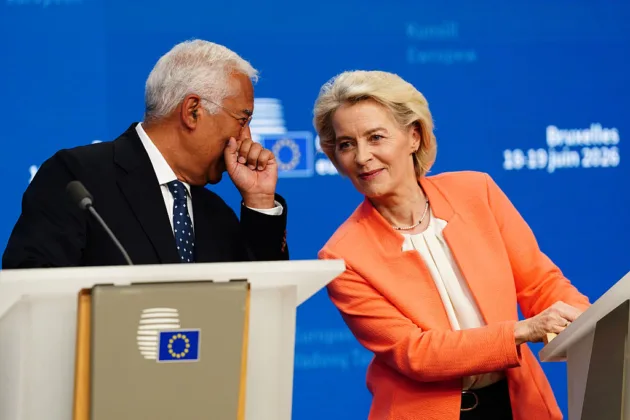
“As inflation continues to ease and private consumption and investment growth pick up, with unemployment at record lows, growth is set to gradually accelerate over the next two years,” the European Commissioner for the Economy Paolo Gentiloni said.
“However, structural challenges and geopolitical uncertainty weigh on our future prospects. Member States will have to walk a narrow path of bringing down debt levels while supporting growth, aided by the new economic governance framework and the continued implementation of [EU policy].”
“Looking ahead, strengthening our competitiveness through investments and structural reforms is crucial to lift potential growth and navigate rising geopolitical risks,” he added.
Analysts have been less forgiving, with many highlighting that the downward revision showed that Europe was falling further behind the US economically.
Uncertainty over the supply of energy was cited as one of the key reasons behind the decline, with the high cost of Brussels’ “green” policies forcing many companies to look abroad.
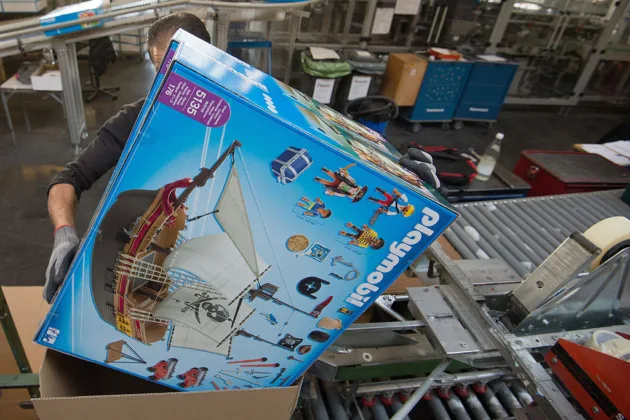
This has led to deindustrialisation within the bloc, with even core EU manufacturers such as Volkswagen shutting factories on the continent due to them no longer being financially competitive.
The EU’s aggregate debt-to-GDP ratio is also growing, with the report having indicated that was partly down to the reduction in inflation eating away at the high nominal GDPs seen by member states.
Peter Caddle contributed to this report.