
The future of liberal democracy in the European Union depends on its response to migration, Polish Prime Minister Donald Tusk said in comments published on October 16 ahead of a summit in Brussels where Warsaw will join calls for a tougher approach.
“The future of Europe and Poland will be played out in this area,” Tusk told Gazeta Wyborcza daily, referring to border security.
“The only question is whether right-wing populists or liberal democracy will provide it,” he added.
Polish Prime Minister Donald Tusk has announced he will suspend the ability of migrants to claim asylum in the country, insisting that the move is now necessary for him to “regain control” of the situation. https://t.co/JRdwLaDlLJ
— Brussels Signal (@brusselssignal) October 14, 2024
Poland has been grappling with a migrant crisis on its border with Belarus since 2021.
Warsaw and the EU say Belarus and its ally Russia have orchestrated the situation by funnelling people from the Middle East and Africa to the border, something Minsk and Moscow deny.
Poland’s government approved a new migration strategy late on October 15 that allows the country to temporarily stop accepting asylum applications, a measure which has outraged human rights activists but which is popular with voters ahead of a 2025 presidential election.
In many European countries, centrists like Tusk have adopted more hardline migration policies in a bid to fend off nationalist and hard-right opponents.
In response to member states’ concerns over the issue, the EU has offered to tighten its migration stance.
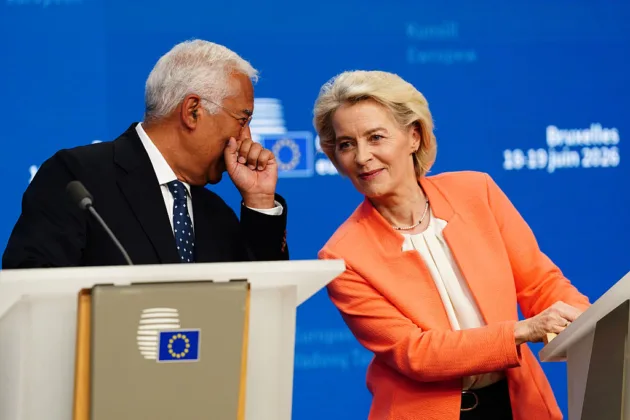
Ursula von der Leyen, who runs the bloc’s executive arm, wrote to EU leaders who will gather to discuss migration on October 17 and 18 that the Commission intended to address 10 issues to help the bloc’s 27 countries deal with migration challenges.
European Commission President Ursula von der Leyen wants to establish so-called “return hubs” outside the European Union to accelerate deportations. https://t.co/I4LXTs9JN9
— Brussels Signal (@brusselssignal) October 15, 2024
Critics ranging from NGOs that help migrants to nationalist opposition lawmakers who themselves advocate strict rules said that the step would break the constitution and international law.
Polish business leaders and economists have also said migration helps the economy.
Tusk, however, told Gazeta Wyborcza the measure was necessary and stressed that it would be a temporary response to Russian and Belarusian attempts to destabilise Poland.
“In practice…respecting all the regulations in a situation where we know that the political asylum formula is being abused and exploited by our enemies, leaves the state completely helpless,” he said.
The migration strategy, which also aims to introduce a more targeted approach to granting visas to workers and students as well as to encourage Poles living abroad to return, was adopted despite dissenting opinions from four left-wing ministers, the government’s website said.