









Germany is experiencing record numbers of asylum seekers and refugees, with round 3.48 million people who claim asylum living in the country in the first half of 2024.
According to the Central Register of Foreigners, that is about 60,000 more than at the end of 2023.
Some 1.18 million of the refugees have fled there from Ukraine, which was 45,000 more than at the end of 2023.
The latest figures came as 227,000 individuals had been told to leave Germany by the end of June 2024, approximately 16,000 fewer than it was six months earlier, but more than 80 per cent are not likely to be deported “in view of the situation in their country of origin”.
Despite the total being around 3.5 million refugees, asylum seekers and individuals having been granted temporary access in Germany, exceeding the populations of several smaller EU member states, Clara Bünger, the spokesperson for refugee policy from the hard-left Die Linke party in the Bundestag, said it was still a relatively small number.
“That’s just 4 per cent of the population,” she told news outlet Neue Osnabrücker Zeitung on September 20.
“Nevertheless, politicians from the traffic light, CDU [Christian Democrats] and AfD [Alternative for Germany] want to make people believe that this small minority is responsible for all their problems. This is dangerous nonsense that only strengthens the far right.”
Migration has been at the top of the political agenda in Germany since the Islamist-inspired terror attack in Solingen in late August and the regional elections in September, where the hard-right, anti-immigration party AfD was victorious in the eastern State of Thuringia and did well in Saxony.
During the past few weeks, the German Government has drastically shifted its policies, tightening asylum measures and introducing border controls, a move that appears to be in conflict with European regulations.
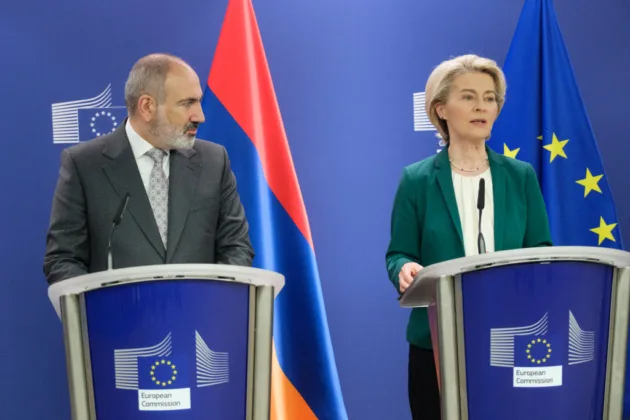
German interior minister Nancy Faeser told the European Commission in a letter in mid-September that her country could not handle the migration situation any more and drastic reforms on a European scale were needed.
She proposed a change in the Dublin Regulation, the European rules that determine which European Union member state is responsible for deciding on an asylum-seeker’s application.
German voters did not seem impressed. An opinion poll by the Allensbach Institute published on September 19 showed just 3 per cent of respondents said they believed the ruling left-wing coalition German Government was beneficial for the country, marking a new low.
Chancellor Olaf Scholz is also under pressure within his own Social Democratic Party (SPD), where his leadership has been questioned.
German Interior Minister Nancy Faeser of the Social Democratic Party has announced the deportation of Islamist criminals back to Syria and Afghanistan. https://t.co/u1n8V4nH9Q
— Brussels Signal (@brusselssignal) July 29, 2024