








The European Union has officially adopted the Migration Pact, with countries now having around two years to fully implement the decision.
A majority of Member States voted in favour of the legislation at the EU Council meeting on May 14, with advocates insisting the legislation will help to reel in illegal migration.
Under the new system, EU countries will be forced to express so-called “mandatory solidarity” with the Member States hardest hit by non-EU illegal migration and will be forced to accept a certain number of asylum seekers from these countries.
Should they refuse, they will be forced to pay €20,000 for each migrant they end up rejecting.
Ireland is one of two countries to chose to abstain from voting on the EU Migration Pact today, not because they’re opting out, but simply to create the illusion that it’s not within their control. It says we abstained but that’s not true as we just didn’t vote (slight… pic.twitter.com/yiEUwyscAJ
— Niall Boylan (@Niall_Boylan) May 14, 2024
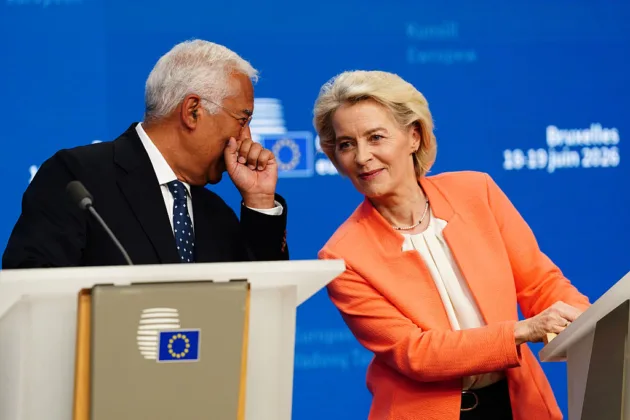
“The new rules will make the European asylum system more effective and ensure solidarity and responsibility among EU member states,” Council President Charles Michel wrote online after the vote.
Belgium’s migration secretary Nicole de Moor sold the new framework as enabling the creation of a “fairer and stronger migration system”.
“These new rules will make the European asylum system more effective and increase solidarity between member states,” she said.
“Only jointly can we find responses to the global migration challenge.”
‼️ The liberal model of mass immigration is "not sustainable" and Europe should instead promote family-friendly policies to solve its demographic challenges, says @vlbelang MEP @TomVandendriese.
Full interview ?? https://t.co/QliqLyJqUz
#migrationeurope #migration #eu pic.twitter.com/fS3xJP39kv
— Brussels Signal (@brusselssignal) May 3, 2024
Not everyone appeared to agree with that position. Hungary and Poland opted to vote against the legislation, while Denmark did not vote.
Ireland also opted to avoid the vote, despite its Government having previously promised to back the deal and not use its specially agreed opt-out clause.
Local journalists claimed that the decision was based on the fact that the Irish Parliament had not yet formally decided on whether to adopt the EU reforms, with a growing number of representatives expressing criticism of the measures.
One of the main figures pushing against the deal is Senator Sharon Keoghan, who has urged Irish Government to exercise its opt-out option.
“We are at a crisis point as a nation,” she told Brussels Signal.
“Our asylum system is overflowing and grossly mismanaged. It’s important that we review domestic resolutions to this problem with national legislation rather than opting for the EU Migration Pact which was not drafted with our crises and system failures in mind.”
MEP candidate Niall Boylan also criticised the EU Pact, as well as Ireland’s handling of mass migration more generally, taking to social media to criticise the deal on May 15.
“Ireland is one of two countries to chose to abstain from voting on the EU Migration Pact today, not because they’re opting out, but simply to create the illusion that it’s not within their control,” he said.
He added that the Government was trying to kick the issue “down the road until after the general election” set for later this year or early next year, after which, he said, the country would fully adopt the Pact.
The European Commission has voiced its support for the chief of European Union border force Frontex after he said it was impossible to stop migration. https://t.co/hjCeovSqm3
— Brussels Signal (@brusselssignal) April 10, 2024