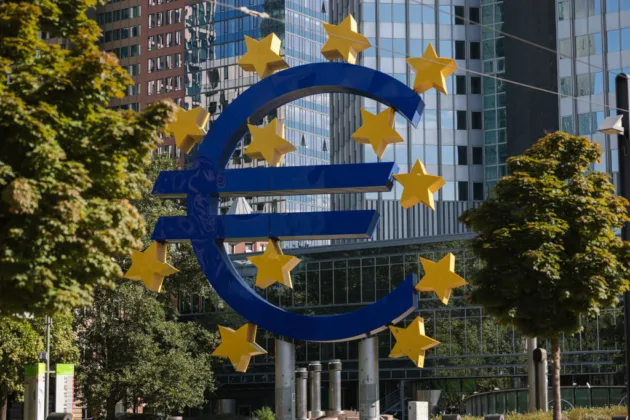






According to a survey released over the Easter weekend an overwhelming majority of Poles oppose entry into the common-currency Eurozone, preferring to keep the Polish złoty.
A poll conducted by the United Surveys agency for news portal Wirtualna Polska (WP) found that 67 per cent of respondents were against any attempt to replace the złoty with the euro, with 27 per cent backing the idea.
Adoption of the common currency was opposed by 52 per cent of voters who, at the last elections, supported parties that now form the Government led by Prime Minister Donald Tusk. Just 37 per cent of pro-Government voters were willing to consider ditching the złoty.
The strongest opposition to the introduction of the euro was from voters who backed the Conservatives (PiS) or the right-wing Confederation party at the last elections, with 95 per cent against adopting the common currency.
The parties that make up the ruling coalition – the Civic Coalition led by Tusk, the Third Way alliance and the Left party – are in favour signing up for the common currency but have indicated there would be no such move any time soon.
Finance minister Andrzej Domański stated in March that Poland has not, as yet, met the criteria for joining the ERM II mechanism pegging the złoty to the euro for a period before the European bloc’s currency is officially adopted.
Both the PiS and Confederation are opposed to Poland adopting the euro, citing what they said were negative experiences for southern Europe and price rises in neighbouring Baltic states and Slovakia.
The governor of Poland’s central bank (NBP) Adam Glapiński has said he would not support any such move until the Polish GDP per head was around that of Germany’s. He is currently facing an attempt to oust him by the Tusk Government over an alleged failure to control inflation.
Membership of ERM II requires Glapiński and Domański to apply to the European Central Bank, proposing a fixed rate of the złoty to the euro, requiring the Polish central bank to maintain that set value with only 15 per cent variations either way.
(PiS) MP Zbigniew Kuzmiuk told Brussels Signal: “The attempt to oust Glapiński has been caused by his staunch opposition to making any moves towards adoption of the euro, which he is capable of blocking as joining the ERM II mechanism is not possible without consent of a country’s central bank.”
The PiS also pointed to the fact that the Polish Constitution would need to be changed for the złoty to be replaced by the euro and to do that a two-thirds majority in favour in Parliament would have to be secured.
Poland joining the ERM II mechanism would be possible as long as the head of the central bank consented.
Adopting the European common currency was part of Poland’s European Union accession treaty, although no deadline for doing so was agreed.
The previous Tusk-led government (2007-2015) considered such a move but backed out amid the financial crisis of 2008. The then-finance minister Jacek Rostowski persuaded Tusk that Poland retaining the złoty was a useful tool enabling devaluation to avoid a deep recession.
Poland’s political parties are currently occupied by elections at the regional, municipal and county levels on April 7. Campaigning for the European Parliament elections in June is yet to begin.
The fact that Poles continue to oppose adopting the euro will likely become a focus of the PiS campaign in the European elections, while it will probably be an issue the ruling coalition would prefer to side-step.