




French citizens’ trust in the European Union is at one of its lowest levels to date.
In a Eurobarometer survey on October 24, just 34 per cent of French people questioned said they trusted the EU, while 55 per cent said they had “no confidence” in Brussels.
With seven months to go before the 2024 European Parliament elections, the results could have big implications for one of the bloc’s biggest Member States.
In the current polling for the Parliament elections, Marine Le Pen’s national-populist and EU-critical Rassemblement National (RN) party is leading by a wide margin in France.
According to a poll from earlier in October, RN has led with 28 per cent support, while the coalition of parties supporting President Emmanuelle Macron’s Government, called Ensemble (Together), trailed at 20 per cent.
Marine Le Pen’s Rassemblement National (RN) has surged ahead in the French opinion polls ahead of the 2024 European Parliament elections. https://t.co/vPWMyWadNc
— Brussels Signal (@brusselssignal) October 18, 2023
Other polls predict that, should France’s various left-wing parties remain united for the parliamentary elections, they would stand a good chance of challenging RN for the top spot.
Recent events, especially the Hamas attack on Israel and France’s ban on some Muslim clothing in schools, have torn the French Left apart.
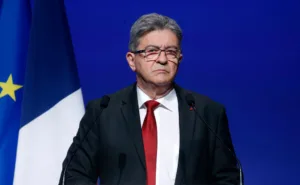
Members of the hard-left La France Insoumise (LFI) party, led by firebrand Jean-Luc Mélenchon, have come under heavy criticism for their supposed “anti-Zionist” stance.
Prior to that, the French Socialist Party leader had said he had no interest in the “soap opera” infighting that a common left-wing list would likely entail.
The head of the French Socialist Party, Olivier Faure, said he does not want to be part of a united left-wing list ahead of the European Parliament elections next year. https://t.co/KBtxNKPNOm
— Brussels Signal (@brusselssignal) October 5, 2023
Overall, the polling figures show a changing attitude in what has has historically been considered one of the most pro-EU countries in the bloc.
France, along with Germany, was one of the founding Member States of the EU. Many commentators have pointed out that the then-French government was one of the leading voices for creating a “United States of Europe” in the bloc’s early days.
That has since changed with France’s growing negativity towards the EU. Part of that appears rooted in a bleak perception of the overall situation in the country and wider Europe.
A staggering 69 per cent of the French population view their national economy as “bad” with similarly grim views on the European economy and employment.
Over the past 70 years, France’s stance towards the EU has undergone distinct phases.
From the 1950s to the 1980s, there was a “permissive consensus” prevalent, with European integration being driven from the top down, and although that was largely detached from public involvement, it was still popular.
In the early 1990s, the so-called “Maastricht moment” marked a shift, introducing a period of division.
The 1992 Maastricht Treaty referendum on its ratification split France, with 51 per cent voting “yes” and 49 per cent “no.” This marked the beginning of growing scepticism towards the EU as a whole.