






A wind farm in Germany is being dismantled to make room for the expansion of a lignite coal mine, angering climate activists.
To accommodate the expanding open-cast mine Garzweiler II mine in North Rhine-Westphalia, energy firm RWE has already removed one wind turbine. It is aiming to take down seven more.
The company hopes to extract between 15 and 20 million tons of lignite coal, also known as brown coal and regarded as the most polluting form of the fossil fuel.
RWE is also demolishing a state highway, the L12, that runs by the windmills, much to the annoyance of the local residents who regularly use the roadway.
The facility’s expansion is the “most significant operational plan under the mining law,” according to spokesperson Guido Steffen. The objective is to “extract lignite in this area as planned”.
Just when you thought you’d seen it all, #RWE begins dismantling wind turbines to expand its Garzweiler #coal mine.
This, from the company that only months ago pledged to quit coal by 2030, and authorised by a government that claims to want ?? to exit coal in the same year ? pic.twitter.com/Vf8OI5YLba
— Beyond Fossil Fuels (@Beyond_Fossils) August 25, 2023
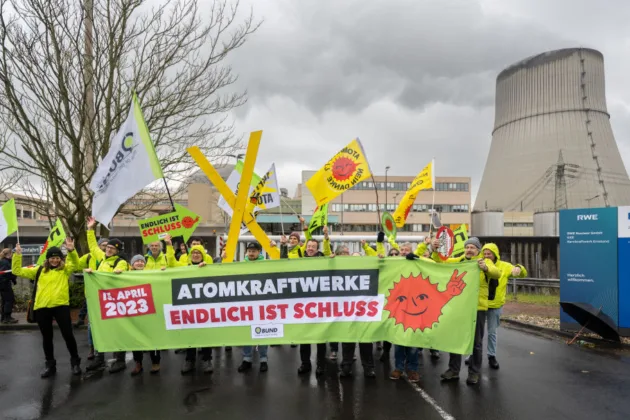
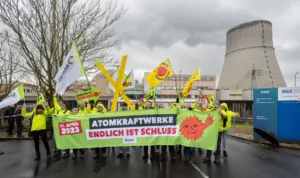
The German Government said the mine’s expansion was necessary because of the energy crisis caused by the Russian invasion of Ukraine and the move was defended by the Green economy minister Robert Habeck. But critics say the need for more polluting coal energy is a direct result of the closing of nuclear power plants in the country.
In January, there were major protests against the expansion decision, which also required the destruction of the village of Lützerath.
A strong police presence was needed to keep order and among 15,000 activists protesting at the site, including the famous Swedish climate campaigner Greta Thunberg who was physically pushed away from the scene.
The police eventually had to use pepper spray and batons to remove the protestors.
Activists belonging to the Fridays For Future organisation criticised the German Green party for exploiting the energy crisis as a means to justify the contentious decision regarding Lützerath.
Lignite generates lower heat levels compared to other coal types but it produces the same amount of carbon dioxide and sulphur emissions. It also contains various toxic heavy metals and poses the most significant risk to human health among all coal varieties.
The Garzweiler open-pit mine covers an area of 66 square kilometres, making it one of the largest such mines in Germany.
Once all the commercially viable coal has been mined, which is expected to be completed by 2030, the government plans to turn the area into a series of lakes.
RWE hat soeben begonnen, die #L12 am Tagebau Garzweiler II abzureißen. Für Braunkohle, mitten in der Klimakrise. ?
Kommt nach #Keyenberg, dort findet ihr die @MaWaLuetzerath! pic.twitter.com/9ZoCrRmGdq— Alle Dörfer Bleiben (@AlleDoerfer) August 23, 2023
Anstatt die alten #Windenergieanlagen zu repowern lässt die @RWE_AG sie lieber abreißen, um Material für die ökologisch nachteilige vollständige Verfüllung des östlichen Restlochs des Tagebaus #Garzweiler zu gewinnen. Das ist der #Kohleausstieg "made in #NRW". pic.twitter.com/Ncwhy3jCZQ
— BUND NRW e.V. (@bund_nrw) August 28, 2023