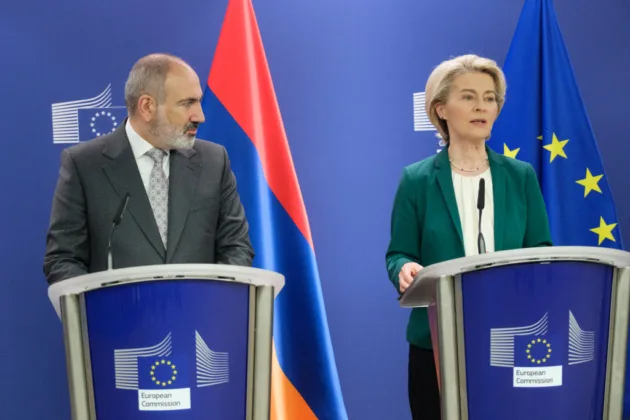




The Prime Minister of Spain, Pedro Sanchez, has advocated “a more federalised European Union” at a press conference on July 3 at the inauguration of the Spanish presidency of the EU.
Spain takes over the rotating leadership of Council, one of the EU’s most important institutions, just as the bloc seems to be heading into troubled waters.
Already set to have to wrestle with tough issues at the EU level, including the controversial Green Deal and the Migration Pact, as well as at the national level – looming Spanish elections that he may lose – Sanchez faces a potentially torrid time.
In leading the Council for the next six months, Spain must tackle several urgent proposals that the EU is fighting to get over the line before the 2024 European elections.
One of them is a renewed drive for an enlargement of the bloc. Given heightened tensions with Russia following its invasion of Ukraine, the EU is now rushing to bring several new countries under its umbrella, including Ukraine, Moldova and the nations of the Western Balkans. However, many officials argue that such additions would force major reforms on the EU’s existing institutions, treaties and political structure.
Asked about this at the July 3 press conference, Sanchez said he believed the solution was for more power to be centralised in Brussels. “In my view what we need is a more federal European Union” he said, adding that Member States needed to “share” their sovereignty.
The proposed Migration Pact is another thorny issue. While many EU national governments agreed with the current form of the Pact in the last European Council summit, Hungary and Poland held out and denied the meeting a final consensus.
Legally, the EU does not need an unanimous vote on the proposal. However, Poland and Hungary cited previous official Council statements that committed it to dealing with migration issues by consensus.
Still, Sanchez appeared to dismiss that, saying political legitimacy came from EU treaties. In other words, he considered it perfectly acceptable for the European Council to ignore previous commitments, because a vote that Hungary and Poland opposed would still be legal.
At home, his difficulties may be equally taxing.
Spain heads for national elections on July 23. Many Polls currently predict a win for the centre-Right Popular Party (PP), with Sanchez’s Spanish Socialist Worker’s Party set to lose many seats.
However, it would not be the first time a country had a change of government during its EU tenure and many predict that a flip to a Right-wing government in Spain would have a minimal impact on Council workings in the bloc.
However, the spectre of Spain’s VOX nationalist party becoming the main candidate for a possible coalition with PP has led some to speculate that, in the same way pressure from the nationalist Sweden Democrats, who support Sweden’s centre-Right government, influenced Sweden’s Council presidency, so a PP coalition with VOX may produce similar results regarding Spain’s tenure.