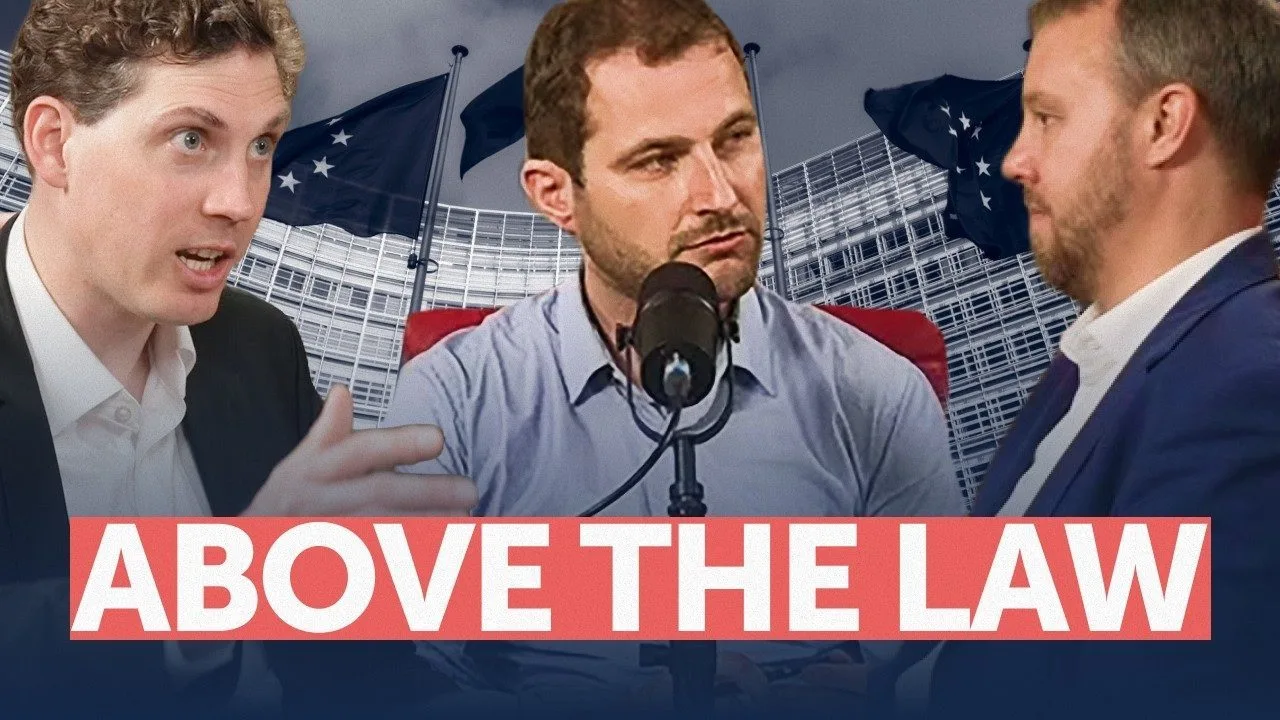

The European Commission was caught between a rock and a hard place on June 21 over how to respond to growing controversy regarding the presence of a number of Ukrainian prisoners of war (POWs) in Hungary whom, Hungary claims, were released as a result of an agreement between the Russian Orthodox Church and a charity organisation.
Facing a barrage of questions from journalists at the June 21 press briefing, EC and European Union spokespeople were clearly unsure about how to respond to the situation.
The difficulties centre on the transfer of 11 Ukrainian POWs to Hungary from Russia earlier this month. Ukraine wants its soldiers back but so far only three have been confirmed as going home. Apparently, the remaining eight wish to remain in Hungary.
All the POWs are believed to belong to Ukraine’s ethnic Hungarian minority.
According to Hungary’s government, the transfer of the prisoners was not organised by Hungarian authorities but between the Russian Orthodox Church and the Hungarian branch of the Order of Malta.
“The state of Hungary was absolutely not involved,” said Hungarian Foreign Minister Péter Szijjártó. Budapest insisted the POWs had arrived of “their own free will” and “can also leave the country freely at any time of their own free will.”
“If even one person regains his freedom, that is good news,” said Szijjártó, “and this is eleven times more good news.”
However, Ukraine’s Ministry of Foreign Affairs spokesman, Oleg Nikolenko, hit back at Gulyas’ claims. “All attempts by Ukrainian diplomats over recent days to establish direct contact with the Ukrainian citizens have failed,” he posted on Facebook.
“This, as well as information received from the relatives of some of them, indicates that the Hungarian authorities’ assurances of the alleged free status of Ukrainian defenders in Hungary are not true,” he claimed. “In fact, they are kept in isolation.”
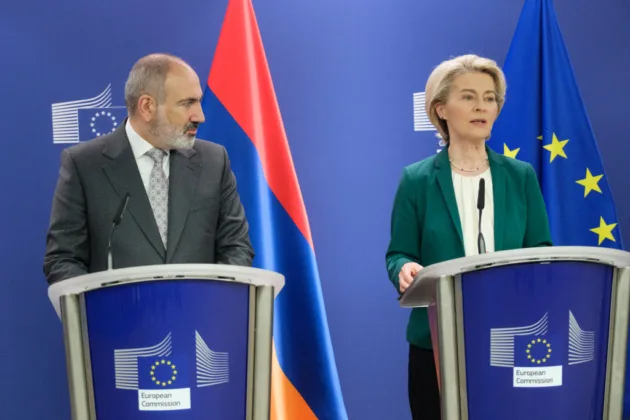
At the press conference, Peter Stano, the EC spokesman for foreign affairs and security policy, pointed out that the transfer was “not coordinated with Ukraine”. He then struck a seemingly critical note regarding Hungary, saying that the nation “should have the agreement of Ukraine as these are Ukrainian citizens”.
When asked by the press what the Hungarians’ position was in relation to the situation, EC representatives refused to elucidate, arguing it wasn’t their role to do so. However, after being further pressed on the issue, they admitted they hadn’t yet enquired but insisted they “are going to ask”.
One journalist among those pressing the EC, asked what would be done about the allegation that “there’s an EU state holding POWs hostage”. Another asked what the EC could “expect the Hungarian government to explain if they weren’t involved” in the transfer?
Faced with such a grilling, representatives said the EC could only wait on the answers before it made a decision. Stano said he expected the Hungarian authorities to explain, “What happened, how it happened, who was involved, who was not involved.”
EC and EU chiefs now face an unenviable dilemma. Since the Ukrainian POWs are ethnic Hungarians, should the EU encourage members of an ethnic minority to fight for a country that, according to Hungary and Romania, mistreats them? Or should the EU force the POWs, whom Kyiv may regard as deserters, to return to the frontline in Ukraine’s war of resistance?