





Iran and the United States have traded military strikes across the Gulf, raising fears of a wider war in the Middle East.
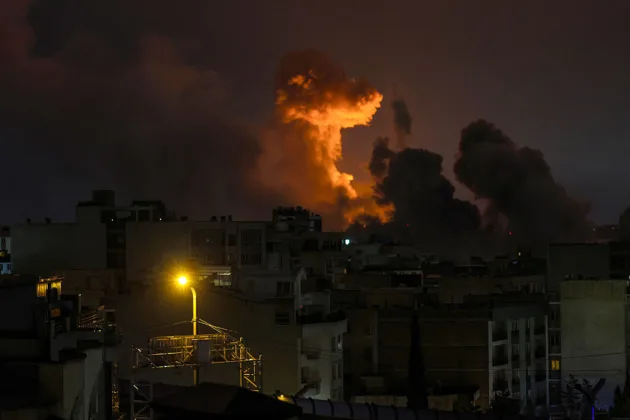
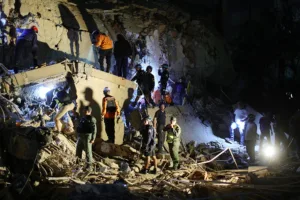
Iran’s Islamic Revolutionary Guard Corps (IRGC) said it had attacked the headquarters of the US Fifth Fleet in Bahrain, the Ali Al Salem airbase in Kuwait and a base in Jordan in the early hours of June 10. The strikes came hours after American forces bombed Iranian territory near the Strait of Hormuz.
Authorities in Bahrain and Kuwait confirmed that air raid sirens had been activated, urging residents to remain calm and move to safety. Kuwait’s military said its air defences were responding to hostile aerial targets.
The IRGC claimed to have hit 21 air and naval bases across the region and to have destroyed hangars housing F-35 fighter jets at the base in Jordan, though it offered no evidence for those figures.
It described the operation as a response to what it called the “atrocities” of the US military against residents of southern Iran.
The Iranian assault answered US strikes on June 9 against Iranian air defences, ground control stations and surveillance sites near the strait. US Central Command (CENTCOM) said the operation had been a “proportional response to unjustified Iranian aggression”.
US President Donald Trump ordered the strikes after blaming Iran for downing a US Army Apache helicopter over the strait a day earlier. Two pilots were rescued unharmed by an unmanned sea drone.
Iranian foreign minister Abbas Araqchi condemned the American action as a violation of his country’s sovereignty and territorial integrity. He said Tehran had exercised its “inherent right to self-defence” in striking the bases and assets it held responsible for the attacks.
Araqchi warned that Iran would not hesitate to target the origin of any further strikes, along with the bases used to support them.
The escalation has revived fears of a wider war in a region that hosts several American installations. About a fifth of the world’s oil passes through the Strait of Hormuz, leaving European energy markets exposed to any prolonged disruption.
The exchanges came after Iran and Israel traded their first direct strikes since a truce in April, straining a fragile ceasefire.