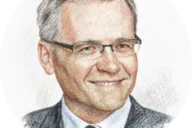
Poland’s defence minister Władysław Kosiniak-Kamysz appeared to make Ukraine’s European Union accession conditional on “resolving” a dispute with Poland over a Second World War atrocity.
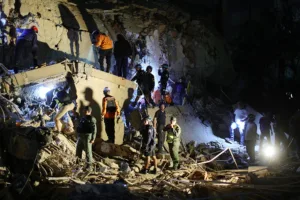
The Volhynia Massacre, carried out by the Ukrainian Insurgent Army (UPA) from 1943 to 1944, was a campaign of ethnic cleansing targeting the Polish population in the Volhynia region, now located in present-day western Ukraine.
It resulted in the deaths of tens of thousands of Poles and remains a deeply contentious and painful chapter in Polish-Ukrainian history, with experts still debating whether it constituted an act of genocide.
“I believe that without respecting and commemorating the victims of Volhynia and their exhumation, there can be no talk of Ukraine’s entry into the European Union” said Kosiniak-Kamysz in an interview with Polish public radio.
Kosiniak-Kamysz was reacting to the recent controversy surrounding remarks made by Ukrainian minister Dmitry Kuleba at a public event in Olsztyn, northeast Poland.
Kuleba suggested that historical issues such as the Volhynia massacre should be left to historians without affecting Polish and Ukrainian efforts at building a shared future.
He also controversially compared the massacre to the forced resettlement of Ukrainians from southeastern Poland in the post-war period when Polish and Soviet troops fought against UPA forces in the region.
Senior Polish People’s Party (PSL) MP Marek Sawicki told reporters on September 1 that he was outrageous and pointed to Kuleba having questioned the validity of the current Polish-Ukrainian border.
He also compared Kuleba’s remarks to Russian claims that the murder of thousands of Polish soldiers in Katyn was revenge for the fact that many Russian soldiers died in prisoner-of-war camps in Poland in 1920 during the Polish-Soviet war.
In his interview with Polish radio Kosiniak-Kamysz, who is also PSL leader and deputy Prime Minister in the Donald Tusk-led government, criticised Kuleba’s remarks, arguing that the Volhynia issue could be overlooked and that honouring the victims appropriately was crucial for reconciliation.
He added, regarding Ukraine’s war with Russia, that Poland had the right to “expect Ukraine’s appreciation of Polish efforts since Poland has already done much to support Ukraine and, while it will continue to help”, it cannot transfer additional MIG-29 fighters as “they are needed to protect Polish airspace”.
A more conciliatory approach was taken by foreign minister Radosław Sikorski who told the Polish Press Agency (PAP) that the unresolved issue of exhuming Volhynia massacre victims in Ukraine could be addressed by Kyiv “in a spirit of gratitude for the aid Poland is providing”.
“Over several hundred years between neighbours, the balance of wrongs is never just ‘one way’,” Sikorski declared, adding that both countries needed to focus on the future but that the past was important and Polish victims of the massacre deserved at least a Christian burial.
He was alluding to the fact that Ukraine has been restricting access for Poland to excavate the remains of the victims of the atrocity.
Kosiniak-Kamysz’s stance was criticised by Szymon Hołownia, the Speaker of the Polish Parliament, whose party Poland 2050 is part of the Third Way electoral alliance together with the PSL.
“Ukrainian membership of the EU would provide both Poland and Ukraine with an eco-system for resolving their differences,” Hołownia said.
The PSL has of late distanced itself not only from its Third Alliance partner but also from the coalition government in general. It has held firm against liberalising Poland’s abortion legislation and adoption of children for same-sex couples while also proposing legislation for “patriotic education”.
The fraught history between Poland and Ukraine is not the only issue causing tension. They have clashed over Ukrainian agricultural exports to the Polish market and Ukrainian competition in the road haulage market.
Still, on security issues, Poland has remained a staunch Kyiv ally as evidenced by recent remarks made by Sikorski that his country should shoot down Russian missiles in Ukrainian air space if they fear they could possibly hit Poland.