Leaders from pro-nuclear European Union countries and energy experts called for a nuclear energy revival at a summit in Brussels, seeking to rebuild the European industry after years of gradual decline.
The political push to expand nuclear – regarded as a low-carbon energy source – is part of the drive to meet Europe’s ambitious climate targets. But it faces headwinds including a lack of investment and cost overruns and delays that have plagued recent projects.
“Without the support of nuclear power, we have no chance to reach our climate targets on time,” International Energy Agency (IEA) chief Fatih Birol told reporters ahead of the Nuclear Energy Summit in Brussels starting on March 21.
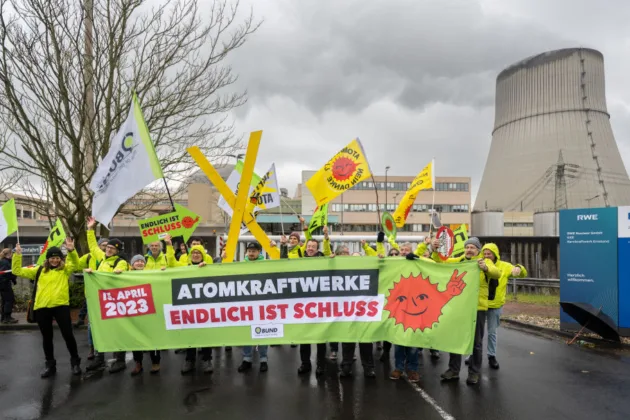
Nuclear energy fell out of favour in Europe over safety concerns following Japan’s Fukushima nuclear accident in 2011, which prompted Germany to immediately shut down six nuclear plants and phase out its remaining reactors. The last three were shut down in April 2023.
But the need to find alternatives to Russian gas following Moscow’s invasion of Ukraine in 2022 and the European Union’s commitment to cut net greenhouse gas emissions 55 per cent by 2030 has renewed interest in nuclear power.
Still, EU Member States remain divided on whether to promote nuclear energy, with two entrenched camps – one led by France that believes nuclear expansion is crucial – the other, includes anti-nuclear countries Austria and Germany, that want the focus to stay on renewable sources such as wind and solar.
Hungary’s Prime Minister Viktor Orbán said Europe must free itself of being “a hostage of ideological approaches”.
In a joint statement, countries committed “to work to fully unlock the potential of nuclear energy by taking measures such as enabling conditions to support and competitively finance the lifetime extension of existing nuclear reactors”.
The statement also commits to the construction of new nuclear power plants and the early deployment of advanced reactors, including small modular reactors worldwide while maintaining the highest levels of safety and security.
UN atomic agency IAEA chief Rafael Grossi said financing was a key issue, adding that nuclear needed to be treated on a level playing field with other energy projects.
“We still have an international and institutional architecture that forbids financing of nuclear projects,” he said.
Grossi told the summit conference that, since the COP 28 climate conference, most countries now agreed that nuclear was part of the solution – which should help secure funding.
“Many decisions of financial institutions depend on governments wanting something or not opposing it,” he said.
Belgian Prime Minister Alexander De Croo suggested involving the European Investment Bank in financing new reactors.
“There is no lack of private financing. Quite the contrary, what lacks is the right circumstances to get private financing going and a multilateral bank should be a lever to multiply investment,” he said.
In response to a question, De Croo also said that European nuclear industry supply-chains needed to disconnect from Russia as fast as possible, while balancing existing operations.
Several European countries depend on Russian technology and uranium to supply and maintain their reactors.
The US, too, is looking to revive nuclear.
“We’re supporting the French initiative to encourage the World Bank and other development banks to eliminate the restriction on funding nuclear,” John Podesta, senior advisor to the US President for clean energy, told reporters.
He added that Congress recently approved €2.48 billion to restart an enrichment programme, particularly for advanced fuels such as helium.