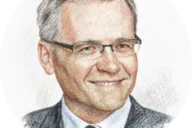
Polish President Andrzej Duda has expressed doubts that Crimea, occupied and then annexed by Russia, will ever “return” to Ukraine.
He said that was because the peninsula has historically spent more time under Russian rule than Ukrainian control.
In an interview for online channel Kanał Zero on February 2, Duda was asked if Ukraine would be able to regain Crimea.
He replied that he believed it would retain the Eastern Donetsk and Luhansk regions but added: “Crimea is a special place, especially for historical reasons. Because in fact, if we look historically, for more time it was under Russia’s control.”
Crimea has changed hands a number of times throughout its history. In 1783, it was annexed by Russia but later, as part of the Soviet Union, it was transferred to Ukrainian control in 1954 before being occupied by Russia in 2014 and annexed soon after.
Duda’s comments prompted a response from Vasyl Zvarych, Ukraine’s Ambassador to Poland, who wrote on X on February 3: “Crimea is Ukraine: it is and will remain so.
“Russia’s temporary occupation of Crimea is a war crime for which it will be punished,” he said, apparently reminding the Polish President that the “de-occupation of Crimea is our shared task and obligation with the free world”.
Allies of the Donald Tusk-led Government were less diplomatic. Roman Giertych MP called Duda’s remarks “incredibly stupid” as, he said, “there are cities in Poland that in their history belonged to us for a shorter time than to another country”.
His point was amplified by the present Government’s “tsar” for the rebuilding of Ukraine, Paweł Kowal MP, who told commercial broadcaster RMF FM: “Crimea was actually Russian for as long as the city of Białystok was,” adding that “stories about Russian Crimea are nonsense and show some people don’t know history”.
Duda partially rowed back on his comments on February 3 by reiterating his “strong support” for Ukraine and condemning Russian aggression, including its “criminal occupation of Crimea”.
“My actions and position on Russia’s brutal aggression against Ukraine have been clear from day one: Russia is violating international law, is an aggressor and an occupier,” Duda wrote on X.
“The Russian occupation of internationally recognised territories of Ukraine, including Crimea, is a crime,” he added.
“This war cannot end with Russia’s victory. Russian imperialism must be stopped, defeated and blocked for the future,” Duda said.
“We all stand shoulder to shoulder for a free, sovereign and independent Ukraine against aggression and brutal imperialism!”
Polish foreign minister Radosław Sikorski released a statement on February 3 making clear that “Poland recognises the independence of Ukraine within its internationally established borders”.
After Duda’s clarification, Sikorski sought to “close the matter”, telling the Polish Press Agency (PAP) that “everyone can have a slip of the tongue, everyone makes mistakes sometimes”.
He added: “It seems to me that President Duda’s sympathy for Ukraine is beyond doubt and consistent with the Government’s position.”
Both Tusk and Sikorski, who took over the reins of Government in December, have been clear they will continue the policies of the previous Conservative (PiS) administration with regard to supporting Ukraine. Tusk himself has called on the European Union to impose the “broadest possible” sanctions on Russia.
Nevertheless, Duda’s remarks were the first time a senior Polish official has in any way departed from the official line of declaring full support for Ukraine’s claims on Crimea. That likely will be seen by some as an indication there may be flexibility on the issue in Poland.
Duda did react strongly to the invasion of Ukraine by Russia and has been at the forefront of international efforts to come to its aid.
Relations between Duda and Ukrainian President Volodymyr Zelenskyy cooled last year after the Ukrainian side was seen as stopping short of accepting the full blame for the Volhynia massacre of civilian Poles during the Second World War. In addition, Zelenskyy’s officials reacted furiously to Poland’s grain embargo on Ukraine.
The previous PiS government was also peeved by Ukraine’s apparent pivot towards Germany and its lobbying of Brussels against Poland on agricultural and road-haulage issues.