










European Union Member States and MEPs have struck a preliminary deal to ease the bloc’s stringent fiscal rules, giving governments more time to reduce debt and incentives to boost public investments in climate, industrial policy and security.
The revamp on February 10 of the two-decades-old rules known as the Stability and Growth Pact came after some EU countries racked up record-high debt.
That came as they increased spending to help their economies recover from the Covid pandemic and as the bloc announced ambitious “green”, industrial and defence goals.
The new rules set minimum deficit and debt-reduction targets that are much less ambitious than previous figures.
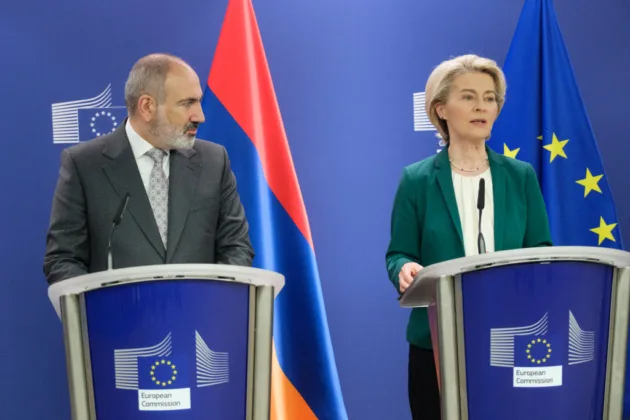
“At a time of significant economic and geopolitical challenge, the new rules will allow us to address today’s new realities and give EU member states clarity and predictability on their fiscal policies for the years ahead,” said European Commission Vice-President Valdis Dombrovskis.
“These rules will improve the sustainability of public finances and promote sustainable growth by incentivising investment and reforms.”
Commenting on the deal, MEP Margarida Marques said: “With a case-by-case and medium-term approach, coupled with increased ownership, Member States will be better equipped to prevent austerity policies.”
The revised rules allow countries with excessive borrowing to reduce their debt on average by 1 per cent per year if it is above 90 per cent of gross domestic product (GDP), and by 0.5 per cent per year on average if the debt pile is between 60 per cent and 90 per cent of GDP.
Countries with a deficit above 3 per ent of GDP are required to halve this to 1.5 per cent during periods of growth, creating a safety buffer for tough times ahead.
Defence spending will be taken into account when the Commission assesses a country’s high deficit, a consideration triggered by Russia’s invasion of Ukraine.
The new rules give countries seven years, up from four previously, to cut debt and deficit starting from 2025.
But a member state with excess debt would not be obliged to reduce this to under 60 per cent by the end of the period of the seven years, as long as it is on a “plausible downward path”.
EU countries, Council of Ministers and European Parliament will need to formally endorse the preliminary deal reached by the negotiators on February 10 before it can take effect next year.