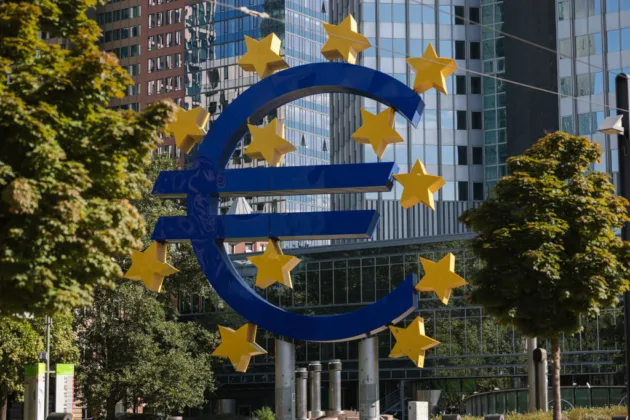





European Parliament members remain unconvinced about the benefits of a “digital euro” despite the best efforts of the European Central Bank.
Italy’s Fabio Panetta, a senior figure for the ECB, spoke to MEPs on September 4 regarding the proposed Central Bank Digital Currency (CBDC) in an attempt to assuage the many fears surrounding it.
They did not appear to be convinced, with many relaying the fears of their electorate to the Italian banker.
“They are fearful that this will push out the use of cash,” European People’s Party (EPP) politician Markus Ferber told Panetta.
Ferber added that many voters are doubtful that the digital euro would give them any benefits that a combination of cash and a debit or credit card could not.
Such a position was echoed by MEP Michiel Hoogeveen of the Netherlands, who described the CBDC as being “a solution looking for a problem”.
He asked if it would not be better just to put the project “on ice” until its use became necessary due to some sort of financial assault from a foreign power, such as China.
While the debate on de-industrialisation in Europe is raging, the European Commission is pumping bags of cash into research exploring regrowth and the “planned economy”. https://t.co/QQbG7fGNN5
— Brussels Signal (@brusselssignal) August 15, 2023
Panetta rebuffed those concerns, insisting that the digital euro’s ability to be used everywhere, both on and offline, would present consumers with substantial benefits.
He also insisted that the purpose of the CBDC would not be to replace physical cash, as some citizens seemed to fear.
“Cash is here to stay but, alongside cash, there will be a new form of central bank money – the digital euro,” the central banker told politicians.
Panetta did admit that the use of such a currency would require increased use of digital identification in the form of some sort of EU-wide digital ID in order for the currency’s digital “wallets” to function.
This appeared to raise alarm bells for ID group politician Dr Gunnar Beck, who pushed Panetta on the question of whether or not the ECB would be able to track transactions made by Europeans.
“The ECB says it guarantees the anonymity of the payer, but how?” Beck asked. “The individual wallets are hosted by the European system, then the European digital app is used by payers to pay a particular amount to a payee.
“By definition, this means that the euro system knows who is ordering which payment.
“To say you will not use this information is different from saying that you cannot identify this information,” he added.
Panetta insisted that the ECB would not be able to identify a person’s digital euro wallet even if it wanted to.
“We are not asking you to trust us,” he said, arguing that forms of cryptographic encryption would be able to keep an individual’s personal information private.
Efforts to censor the internet in Europe must be left to the European Union and its Digital Services Act, the European Commission has told France. https://t.co/C6RmyA6Swa
— Brussels Signal (@brusselssignal) August 3, 2023