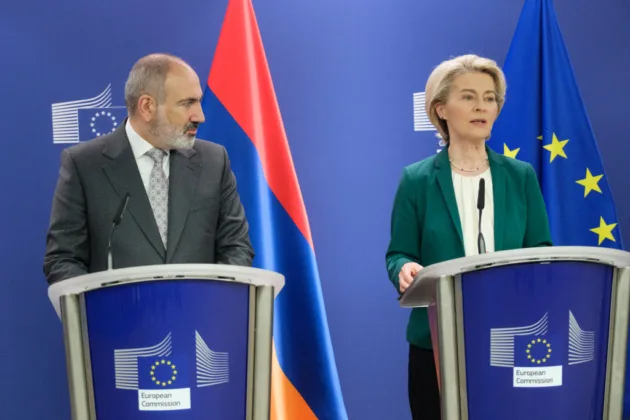




The decision to increase the European Union’s multiannual budget will not fuel inflation within the bloc, the European Commission has insisted.
It comes as multiple MEPs pile pressure on the bloc over the move to allocate substantially more funding to its Multiannual Financial Framework (MFF), with an extra €66 billion expected to be spent between 2024 and 2027.
Commissioners are now insisting that the hike will not affect inflation within the EU, describing the increase in spending as a mere drop in the ocean compared to the entire economy.
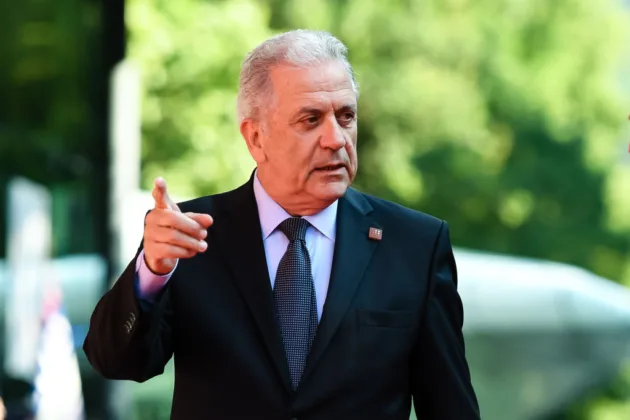
“The additional amounts proposed by the Commission … would imply yearly additional payments of €16.45 billion,” said EU budget Commissioner Johannes Hahn.
“This would represent not even 0.09 per cent of EU GNI [gross national income] in the year 2024, which cannot be expected to have a significant impact on inflation,” he added.
Hahn also noted that much of the funding would likely end up being spent in Ukraine rather than the EU specifically, further lowering the chance that the increase would boost inflation within the bloc.
Tensions have been ramped up between Poland and the European Commission over the EC’s revision of the EU budget for 2021-2027. https://t.co/rjdn4zdsxt
— Brussels Signal (@brusselssignal) June 23, 2023
The Commissioner has also been forced to justify the increased spending in the face of various failed EU projects on both migration and its “green” agenda.
Writing to the body, European Conservatives and Reformists MEP Jorge Buxadé Villalba lambasted the EU’s decision to halve spending for its “economic, social and territorial cohesion” while increasing the amount of cash available for its environmentalist agenda.
He also pushed the EC on its decision to increase the EU migration policy budget by €15 billion despite its “disastrous” track record.
Hahn insisted that the decision to halve the economic, social and territorial cohesion budget was simply due to many EU projects within the area being wrapped up. He added that the budget would likely be increased again the next time Berlaymont reviewed the figures.
“In every Multiannual Financial Framework, due to the cyclical nature of implementation of long-term projects, cohesion policy observes a ‘dip year’ in payments when the old programmes reach closure, and the new programmes are not yet at cruising speed, resulting in significantly lower payments than in a normal year,” he said.
“This justifies the decrease between the 2023 budget and the 2024 draft budget.”
The Eurocrat added that the migration budget increase was needed in order to “live up to the new responsibilities” the EU and Member States now have, with the that having stretched the previous budget thin.
“Migration has picked up after the pandemic, straining Member States’ reception-integration capacities,” he said.
“Addressing the root causes of migration, improving border management and maintaining migration partnerships with third countries will need financial support.”
The European Commission is being quizzed by the European Ombudsman over how it will ensure respect for human rights in light of the controversial deal it made with Tunisia. https://t.co/fxKzjJ3xl4
— Brussels Signal (@brusselssignal) September 17, 2023