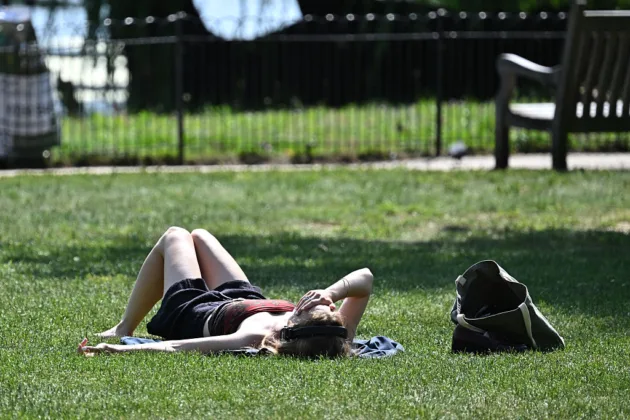









The extremely high temperatures in parts of Europe this summer has led a doctors’ organisation in Germany to suggest the introduction of a new daily work schedule that includes midday naps, or “siestas”.
“We should orient ourselves to how people work in the heat in southern countries: get up early, work productively in the morning, and take a siesta at midday,” the head of the Federal Association of Physicians of German Public Health Departments (BVÖGD) Johannes Niessen told the RND media outlet on July 18.
“People are less efficient in high heat. Poor sleep due to lack of cooling at night also leads to concentration problems,” the medical expert said.
“Therefore, it’s better to schedule complex work tasks for the early morning hours. Additionally, sufficient fans and lighter clothing are necessary, even if the office dress code doesn’t allow it.”
Niessen pointed to other ways to combat the heat such as drinking more water and eating lighter meals in smaller portions. “Taking a cold foot-bath under the desk could be another way to cool down while working from home,” he added.
Germany’s health minister Karl Lauterbach supported introducing siestas but emphasised that the decision of whether to adopt such a practice at work would ultimately lie with individual companies and their employees.
Siesta in der Hitze ist sicherlich kein schlechter Vorschlag. Das sollten aber Arbeitgeber und Arbeitnehmer selbst aushandeln. Medizinisch sicher für viele Berufe sinnvoll. https://t.co/LUtRrWBaeg
— Prof. Karl Lauterbach (@Karl_Lauterbach) July 18, 2023
The German Trade Union Confederation (DGB) has said it will press for workplaces in Germany to offer employees a “siesta-style” midday break, as is common in Mediterranean countries. It also wants employers to regularly conduct “heat-hazard” assessments during the summer months.
“Employers must protect their employees from heat. Working in hot conditions is stressful for employees and, in the worst case, endangers their health. Hazard assessments are the basis for tailored protection,” said DGB board member Anja Piel.