



French president Emmanuel Macron is postponing his long anticipated state visit to Germany due to ongoing riots in major French cities, while the German establishment is helplessly watching the rise of the populist-Right opposition party Alternative für Deutschland (AfD). For a long time, the leadership of the European Union was a strictly French-German affair, but recent events are chipping away at the once unassailable authority of Paris and Berlin. And justifiably so: Always quick to lecture others on how to conduct their affairs, the last few months have shown that neither Scholz nor Macron have their own houses in order.
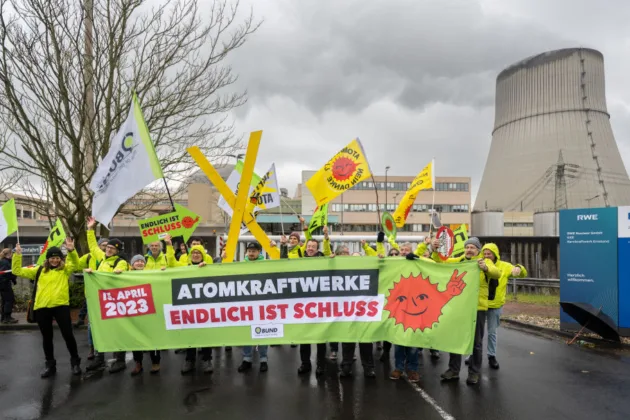
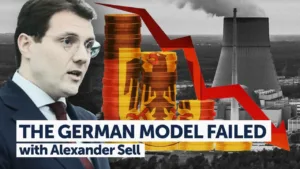
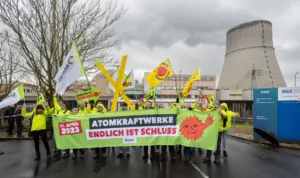
2022 revealed German energy policy to be an absolute disaster, and despite all the lofty promises of an energy transition towards renewables the only thing preventing a complete breakdown of German energy supply was an exceptionally warm winter. Unfortunately, despite being granted some breathing room by the whims of Gaia, the Left-liberal coalition government of Socialists, Greens, and liberal Free Democrats decided to double down on its failed policies. Mandatory heat pumps and proposed bans on everything from heating with oil and gas to the internal combustion engine has caused a backlash in the polls, with more and more Germans either turning their back on politics or shifting their voting intentions to the AfD. Over 60 percent of the population believe that none of the current parties can solve the country’s problems, and almost 20 per cent are willing to vote for the AfD. The media continues to depict these potential voters as being deceived by the party’s appeal to insecurities. But this is simply no longer true.
It is true that the AfD is monitored by German intelligence due to the existence of borderline neo-fascist elements within the party, especially in the former East Germany. But it is the middle class that is shifting towards the AfD. This was highlighted last week, when Robert Sesselmann became the first AfD candidate to win a district election by capturing 53% of the votes cast. The district of Sonneberg in Thuringia is one of the economically better developed regions of the former East, so the result caused shock waves among the political and media establishment. But instead of starting to take the positions of the AfD as seriously as voters are, an attempt was made to reverse a democratic election based on a technicality. Apparently nobody is willing to ask the only question that matters: Could it be possible that a party advocating tighter borders and positioning itself as an opponent of failed energy and climate policy has genuine appeal?
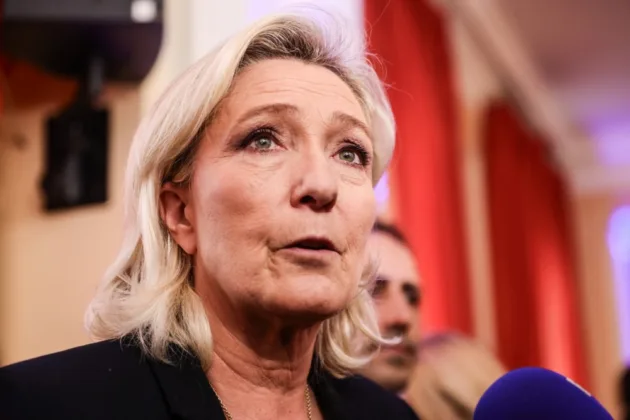
A similar question will soon emerge in France, a country that once again is roiled in violent protests by its immigrant population after police shot a teenager during a traffic check. Two years ago, former high-ranking members of the French military warned that failed immigration policies could lead to civil war like scenarios in France, a warning that was first mocked and then dismissed as a Right-wing conspiracy theory. President Macron himself decided to blame video games and bad parenting for the ongoing riots, but seems unable to admit past failures, just like his counterpart in Berlin.
There is a unified effort by most of the media and the legacy political parties to depict Right-wing alternatives as mere populists that have no solutions, but many voters feel that at least they are willing to talk about the problem. It cannot be denied that from energy to immigration both France and Germany acted as if everything was under control, while in truth things continuously deteriorated. And it is not only the voters who take notice: Poland and Hungary are openly resisting German-French leadership on migration, and it is unlikely that the pictures currently coming out of France will do anything to change that.
At some point it needs to be admitted that for all their extreme rhetoric and often unsavvy characters, Europe’s Right-wing populists have been on to something. Denying that truth or attempting to sabotage elections will do nothing to stop the rise of the Right. On the contrary, it will most likely accelerate it.